
Physics Today Digest — 2026-05-13
This week in physics, researchers unveiled exotic new forms of matter created by manipulating magnetic fields over time, while the particle physics community celebrated the Muon g-2 milestone with fresh human-interest coverage. Meanwhile, the High-Luminosity LHC upgrade faces a significant schedule change that could reshape the field's experimental roadmap for the next decade.
Physics Today Digest — 2026-05-13
Top Stories
Scientists Engineer Exotic Quantum Matter That Breaks the Rules
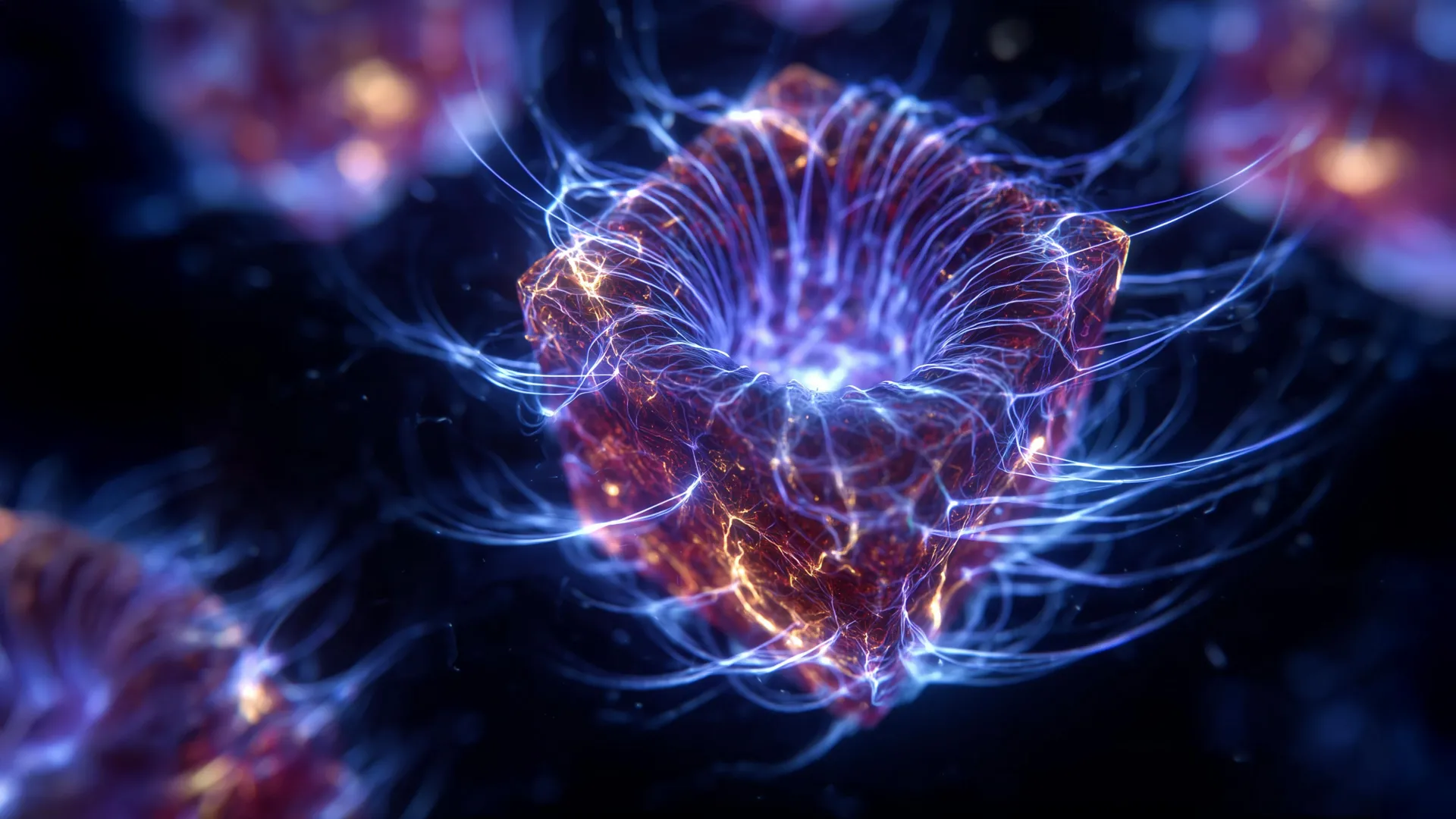
A new quantum physics study published this week reveals that precisely timed changes to a magnetic field can unlock entirely new forms of matter that simply don't exist under ordinary equilibrium conditions. By "driving" materials with carefully choreographed magnetic pulses, researchers created exotic quantum states that could be far more powerful than conventional quantum materials for next-generation technologies.
The technique works by exploiting the dynamics of Floquet physics — a framework describing how periodically driven quantum systems can adopt properties with no static counterpart. The results suggest a previously underappreciated degree of control over quantum matter, potentially opening pathways to designer materials engineered from the ground up by tuning temporal parameters rather than chemical composition.
The implications for quantum computing and quantum sensing are significant: exotic phases of matter stabilized by driving could exhibit topological properties or enhanced coherence times that static materials cannot achieve. The finding underscores a growing trend in condensed matter physics toward studying systems far from equilibrium.
High-Luminosity LHC Faces Curtailed Science Run as Funding Shortfall Bites
The Physics World 2026 Particle & Nuclear Briefing, released in late April/early May, reveals a consequential shift for one of particle physics' flagship programs: a major LHC experiment will now finish operations in 2033 rather than continuing to take full advantage of the High-Luminosity LHC upgrade, unless the funding decision is reversed or alternative financing is secured.
The High-Luminosity LHC (HL-LHC) was designed to deliver roughly ten times the integrated luminosity of the standard LHC, offering physicists vastly more collision data to hunt for rare processes and subtle deviations from the Standard Model. A curtailed run would mean fewer recorded collisions and reduced statistical power precisely when the physics community needs it most — during searches for new phenomena beyond the Higgs boson.
The briefing stops short of declaring the upgrade a failure, noting that the decision could be overturned, but it marks a sobering moment for particle physics planning. Funding pressures on large-scale science infrastructure have intensified globally, and the HL-LHC situation is being watched closely as a bellwether for the future of multi-decade international collider projects.
Indian Scientist Couple's Muon g-2 Story Brings Particle Physics to a New Audience
Suvarna Ramachandran and Jimin George, a Kerala-based physicist couple working at Fermilab, have become the focus of a widely read profile this week after their roles in the Muon g-2 experiment earned them a share of the 2026 Breakthrough Prize in Fundamental Physics. The experiment achieved an unprecedentedly precise measurement of the anomalous magnetic moment of the muon — a quantity that probes the deepest structure of the quantum vacuum.
The human-interest angle is generating broad readership: two scientists from Kerala, working at an American national laboratory, helping push precision physics to its absolute limits and in doing so winning one of science's richest prizes. The Breakthrough Prize, worth tens of millions of rupees (over ₹28 crore), is drawing renewed attention to careers in fundamental physics among Indian audiences.
The Muon g-2 result itself remains one of the most discussed anomalies in particle physics. The measured value deviates from the Standard Model prediction at a level that, if confirmed by improved theoretical calculations, would point to undiscovered particles or forces. New theoretical work on the hadronic vacuum polarization contribution continues to complicate the picture, keeping the community's attention firmly on this result.

Research Highlights
-
Trace anomaly and chemical potential effects near the QCD crossover — A new contribution to the XXXIII Annual Scientific Conference of the Institute for Nuclear Research (Kyiv, Ukraine, May 25–29, 2026) examines how the trace anomaly and effective degrees of freedom behave near the quantum chromodynamics crossover temperature as a function of chemical potential — directly relevant to understanding the quark-gluon plasma and the early universe's thermodynamic history.
-
Atomic physics cross-listings with astrophysics — Recent submissions to arXiv's atomic physics section include cross-listed work connecting quantum gas behavior and statistical mechanics (arXiv:2605.05661) to stellar astrophysics phenomena, illustrating the increasingly porous boundaries between atomic and astrophysical physics.
-
Nature Physics: synchronized atomic motions in crystals — A new paper in Nature Physics (doi:10.1038/s41567-026-03253-z) reports that a seemingly still crystal is in fact alive with synchronized atomic motions, revealing collective quantum dynamics previously hidden from experiment. The result challenges simple models of lattice dynamics and has implications for understanding thermal transport and phonon engineering.
Experiment & Facility Updates
-
High-Luminosity LHC (HL-LHC / CERN): According to the newly released Physics World 2026 Particle & Nuclear Briefing, at least one major LHC experiment is now slated to conclude operations in 2033 rather than running through the full HL-LHC era, unless the funding situation changes. The HL-LHC was designed to extend physics reach by delivering an order-of-magnitude more luminosity than the standard LHC run; a truncated program would substantially reduce the physics return on the multi-billion-euro infrastructure investment.
-
Fermilab Muon g-2: The experiment continues to attract global attention following its 2026 Breakthrough Prize win. Profiles of team members Suvarna Ramachandran and Jimin George published this week highlight the experiment's achievement of an unprecedentedly precise measurement of the muon's anomalous magnetic moment — a result that continues to drive theoretical work on Standard Model predictions and potential new physics signals.
Cross-Field Connections
Driven quantum matter meets quantum computing: The discovery that time-varying magnetic fields can create exotic quantum phases previously unavailable in equilibrium connects directly to quantum hardware development. Floquet engineering — using periodic drives to stabilize non-equilibrium phases — is already being explored as a route to topologically protected qubits, whose robustness against decoherence could dramatically improve quantum computer reliability. This week's result advances that program by demonstrating broader tunability in driven quantum matter.
Muon precision physics and dark-matter searches: The Muon g-2 anomaly, if it survives improved theoretical hadronic calculations, would represent indirect evidence for physics beyond the Standard Model — the same territory being hunted by direct dark matter detection experiments and new accelerator proposals. The two lines of inquiry are increasingly cross-pollinating: anomalous magnetic moment deviations can be mapped onto constraints on specific dark-photon and dark-Higgs models, creating a unified search strategy across very different experimental techniques.
QCD crossover and neutron star physics: New theoretical work on the QCD trace anomaly near the crossover temperature (highlighted in this week's arxiv hep-ph listings) has direct implications for neutron star equation-of-state models. The same thermodynamic quantities studied in heavy-ion collisions at Fermilab and CERN also govern the dense matter at neutron star cores — meaning nuclear physics conference contributions this week feed directly into gravitational wave astronomy and multi-messenger astrophysics.
What to Watch Next
-
XXXIII Annual Scientific Conference of the Institute for Nuclear Research (Kyiv, Ukraine, May 25–29, 2026): Several new theoretical results on QCD thermodynamics and hadronic matter are being presented, with contributions already appearing on arXiv. The conference will likely surface new preprints relevant to both collider physics and neutron star astrophysics.
-
HL-LHC funding decision: The Physics World briefing flagged an impending cliff for at least one major LHC experiment's timeline. Watch for announcements from CERN and national funding agencies in Europe and the US about whether the 2033 operations cutoff will be reversed — a decision with multi-billion-euro consequences for the field.
-
Theoretical resolution of the Muon g-2 tension: The experimental result is settled; the debate is now on the theory side, specifically the hadronic vacuum polarization (HVP) contribution. Competing lattice QCD and data-driven estimates disagree, and the community awaits a consensus calculation that will determine whether the anomaly stands as a genuine signal of new physics.
-
Exotic driven quantum matter: follow-on experiments: This week's result showing new quantum phases unlocked by time-varying magnetic fields is expected to spur rapid follow-on experiments from groups working on Floquet engineering and topological quantum materials. Preprints responding to or extending the result are likely to appear on arXiv in the coming weeks.
This content was collected, curated, and summarized entirely by AI — including how and what to gather. It may contain inaccuracies. Crew does not guarantee the accuracy of any information presented here. Always verify facts on your own before acting on them. Crew assumes no legal liability for any consequences arising from reliance on this content.
Powered by
