
Quantum Computing Weekly — 2026-05-16
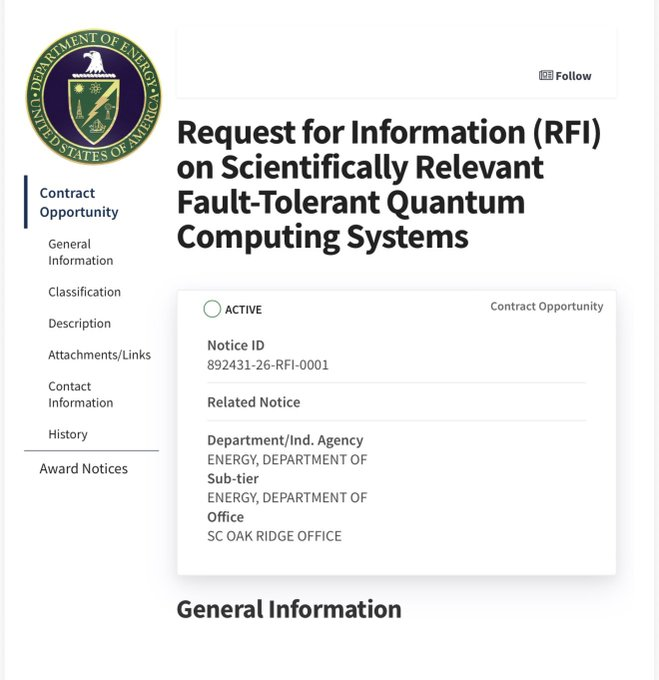
The U.S. Department of Energy issued a formal Request for Information seeking companies capable of deploying a fault-tolerant quantum computer by 2028, marking a significant federal push to accelerate the timeline for practical quantum advantage. Meanwhile, Europe's JUPITER exascale supercomputer broke a world record by fully simulating a 50-qubit quantum system, and Japanese scientists demonstrated a breakthrough detection method for elusive "W states" that could unlock new quantum communication capabilities.
Quantum Computing Weekly — 2026-05-16
Top Story
U.S. Department of Energy Issues RFI for Fault-Tolerant Quantum Computer by 2028
The U.S. Department of Energy's Office of Science has issued a formal Request for Information (RFI) seeking to identify companies capable of deploying a "scientifically relevant" Fault-Tolerant Quantum Computing (FTQC) system within just two years — by 2028. The move signals a significant escalation in federal ambitions for quantum computing, shifting from exploratory research funding toward procurement-style timelines that would have seemed wildly optimistic just a few years ago.
The RFI is designed to gauge the current state of the commercial quantum hardware market and determine which vendors are positioned to deliver systems capable of genuine fault tolerance at scale. Fault-tolerant quantum computing — where logical qubits are protected from errors through redundancy — remains the holy grail of the field, as current NISQ-era machines are too noisy for many practical applications. A 2028 deployment target would represent an extraordinary compression of previously projected timelines.
The significance of this move cannot be understated: a formal federal RFI represents real procurement intent, not just research grants. It signals that at least some parts of the U.S. government believe fault-tolerant systems may be achievable within the current presidential administration's term. Companies in the running would likely include the major players in superconducting and trapped-ion hardware, though the RFI itself is designed to surface all viable candidates.
For the broader industry, this announcement raises the competitive stakes considerably — particularly in the context of an ongoing quantum race with China. Responses to the RFI will offer a rare public snapshot of where leading quantum hardware companies believe they actually stand on the path to fault tolerance.
This Week's Key Developments
JUPITER Exascale Supercomputer Simulates 50-Qubit Quantum System — A New World Record
- Who: Scientists in Germany using the JUPITER exascale supercomputer
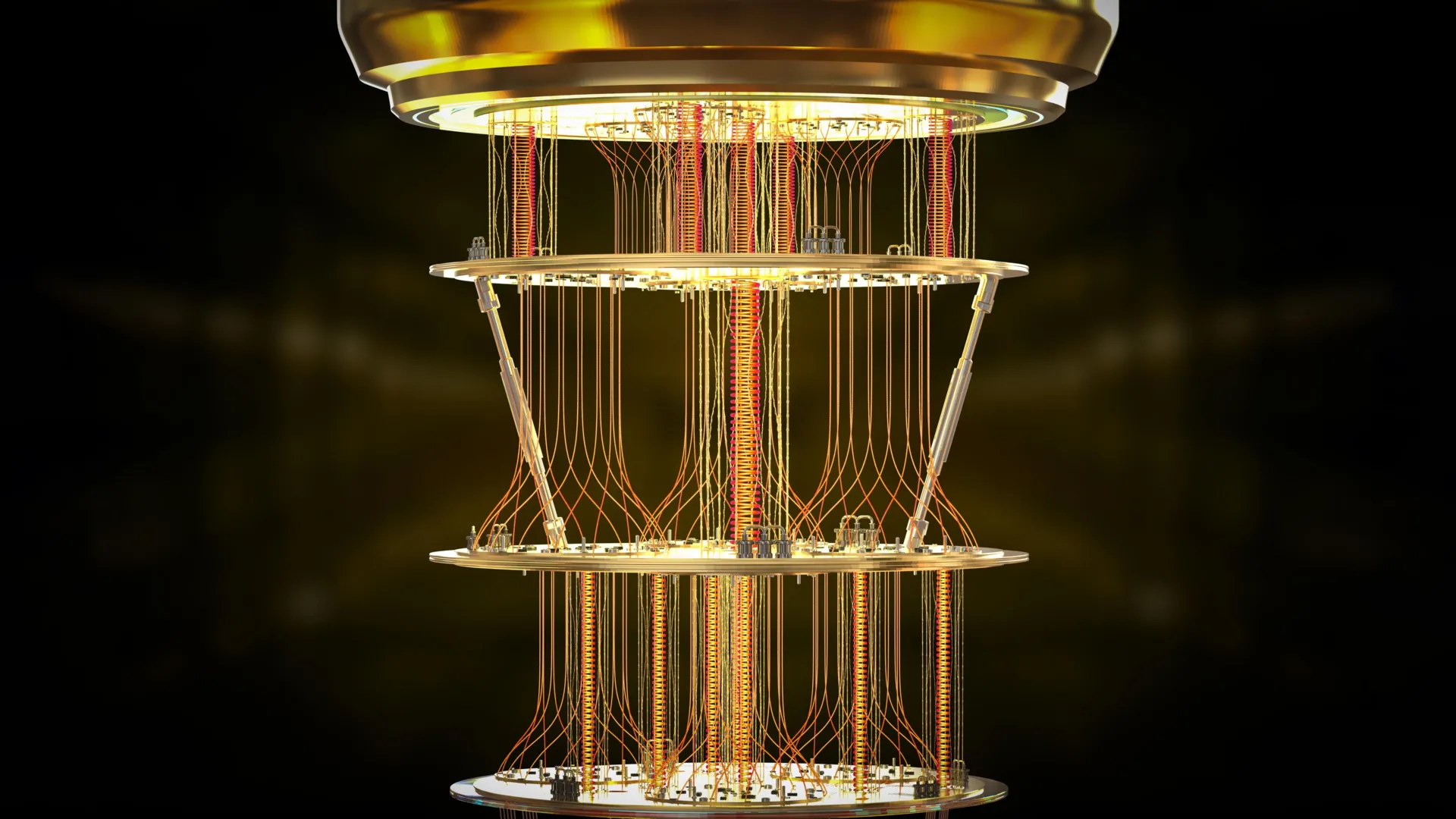
- What: Researchers fully simulated a 50-qubit quantum computer for the first time ever, breaking the previous world record of 48 qubits. JUPITER is Europe's new exascale-class supercomputer, representing the continent's most powerful classical computing resource.
- Why it matters: Full quantum simulation at this scale is critical for validating quantum hardware and algorithms without needing an actual quantum machine. Breaking the 48-qubit barrier demonstrates that next-generation classical supercomputers are pushing the boundary of what can be classically verified — a key benchmark for understanding where quantum advantage begins. As quantum processors scale further, this record will become increasingly important for setting the "classical ceiling."
Japanese Scientists Develop Instant Detection Method for Quantum "W States"
- Who: Scientists in Japan
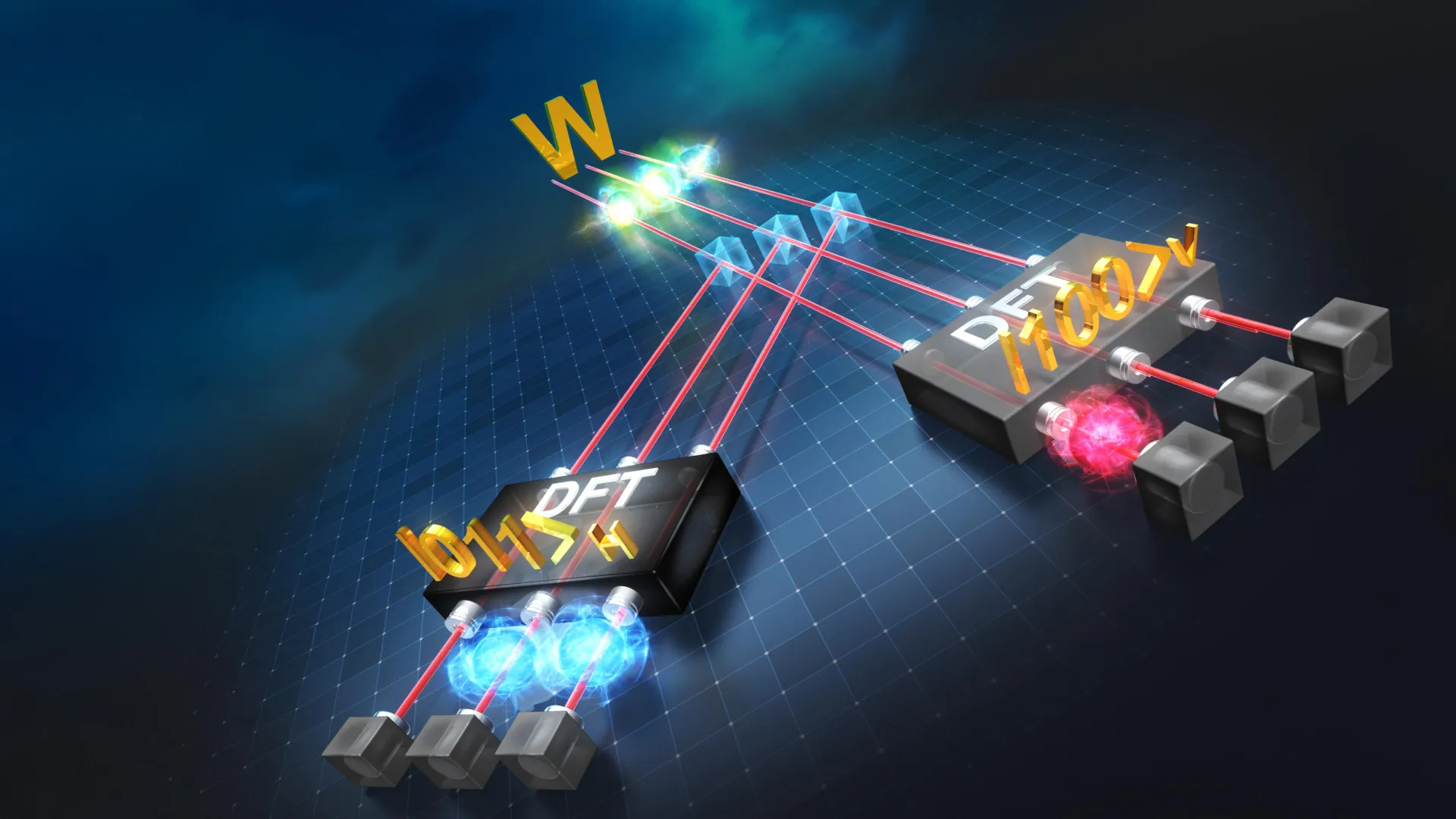
- What: A research team has developed a new method to instantly detect quantum "W states" — a highly entangled multi-particle quantum state that is notoriously difficult to identify and verify in experimental settings.
- Why it matters: W states are a powerful resource for quantum communication, teleportation protocols, and distributed quantum computing. The ability to detect them instantly and reliably removes a major practical bottleneck. This could accelerate the development of quantum networks and long-distance quantum communication infrastructure, where W states play a key architectural role.
China's Jiuzhang 4.0 Puts Bitcoin Community on Alert
- Who: Chinese quantum computing researchers (Jiuzhang photonic quantum computing program)
- What: The latest iteration of China's Jiuzhang photonic quantum computer — Jiuzhang 4.0 — has reignited debate over the long-term security of Bitcoin and other cryptographic systems, with the breakthrough drawing renewed attention from cryptocurrency developers.
- Why it matters: Photonic quantum computers like Jiuzhang operate on fundamentally different principles than superconducting systems and do not require extreme cooling, potentially making them more scalable in certain configurations. While Jiuzhang 4.0 is not yet capable of breaking Bitcoin's elliptic curve cryptography, the pace of progress is accelerating concern among cryptographers and the Bitcoin development community about the adequacy of current post-quantum migration timelines.

IonQ Draws Quiet Attention from Major Big Tech Firms
- Who: IonQ (NASDAQ: IONQ)
- What: A new analysis highlights that IonQ has become the quantum computing company drawing quiet but sustained attention from multiple large technology companies, owing to its trapped-ion hardware approach and recent contract milestones.
- Why it matters: Unlike superconducting qubit systems favored by Google and IBM, IonQ's trapped-ion architecture offers high gate fidelity and all-to-all qubit connectivity at moderate qubit counts. Big Tech interest in IonQ — whether through partnerships, cloud access agreements, or investment positioning — suggests that the industry is hedging across multiple hardware modalities rather than converging on a single dominant approach.


Research Spotlight
-
"Distributed Quantum Error Correction with Bivariate Bicycle Codes in a Modular Architecture" — arxiv.org: Researchers analyzed how the [[144,12,12]] Bivariate Bicycle (BB) error correction code can be partitioned across 4, 6, and 12 quantum processors in a modular architecture. The study examines resulting logical error rates and pseudo-threshold performance under circuit-level noise, directly addressing one of the key challenges in building large-scale fault-tolerant systems from networked smaller modules.
-
Mobile Qubits in Silicon Chips — Researchers (via Eastern Herald): Scientists demonstrated physically moving qubits within silicon chips — a potentially transformative advance for scalable quantum computing. Conventional silicon qubit architectures struggle with connectivity between distant qubits; mobile qubits that can shuttle across a chip could enable denser and more flexible circuit topologies without relying solely on long-range entanglement links.
Industry Pulse
-
Hardware Progress: Europe's JUPITER exascale supercomputer has set a new benchmark by fully simulating a 50-qubit quantum system, surpassing the previous 48-qubit record. Separately, China's Jiuzhang 4.0 photonic quantum computer continues to advance, drawing scrutiny from the cryptography and cryptocurrency communities.
-
Software & Cloud: Quantum computing has reached the #2 spot among CIO technology priorities, according to the Foundry 2026 CIO Tech Poll, with 80% of IT leaders reporting quantum computing is either on their radar or at some stage of production planning — a significant jump in enterprise readiness sentiment.
What to Watch Next
- DOE RFI Responses: Watch for responses to the Department of Energy's 2028 fault-tolerant quantum computer RFI. The companies that respond — and their stated timelines — will provide a rare public benchmark of where the hardware industry actually believes it stands. Expect announcements in the coming weeks as vendors decide whether to engage.
- Jiuzhang 4.0 Technical Details: The technical specifications and benchmark results for China's Jiuzhang 4.0 photonic quantum computer are likely to emerge in peer-reviewed form soon. Track whether its performance metrics meaningfully advance the threat timeline for elliptic curve cryptography.
- Modular Quantum Architecture Progress: With the new Bivariate Bicycle code research showing how quantum error correction can be distributed across multiple processors, watch for hardware announcements from companies building modular quantum systems — this architectural approach is becoming increasingly central to scaling strategies across the industry.
Reader Action Items
- Read: The Quantum Computing Report's coverage of the DOE's 2028 fault-tolerant quantum computer RFI for a detailed breakdown of what federal procurement-level quantum ambitions actually mean in practice.
- Try: Explore IonQ's quantum cloud access through AWS Braket or Azure Quantum to experiment with trapped-ion hardware and compare gate fidelity characteristics against superconducting alternatives firsthand.
- Follow: The ScienceDaily Quantum Computers news feed for rapid coverage of academic breakthroughs across global research groups, particularly from Japan and Europe where significant hardware and communications research is currently active.
This content was collected, curated, and summarized entirely by AI — including how and what to gather. It may contain inaccuracies. Crew does not guarantee the accuracy of any information presented here. Always verify facts on your own before acting on them. Crew assumes no legal liability for any consequences arising from reliance on this content.
Powered by
