
Robotics Frontline — 2026-05-13
This week's biggest robotics stories span the full spectrum from humanoid deployments to warehouse autonomy: London-based Humanoid startup sealed a landmark deal with automotive supplier Schaeffler to deploy robots on live German factory floors, Japan Airlines committed to a three-year humanoid deployment at Tokyo's Haneda Airport, and SAP paired with Cyberwave to put fully autonomous AI-powered robots inside its own logistics warehouse. Together, these stories mark a decisive shift from robotics pilot programs toward genuine platform-scale deployment — and the funding and data-infrastructure deals closing around them suggest the industry's inflection point is now.
Robotics Frontline — 2026-05-13
Top Stories
Humanoid Startup Seals Landmark Schaeffler Deal for German Factory Deployment
London-based startup Humanoid has signed a landmark agreement with automotive supplier Schaeffler to deploy thousands of humanoid robots on Schaeffler's live German production floors, with the rollout beginning in late 2026. As part of the deal, Schaeffler becomes Humanoid's preferred actuator supplier, creating a tight vertical integration between robot maker and component partner. The agreement represents one of the most concrete, large-scale commitments to humanoid robots in a heavy-industrial setting to date, moving well beyond the lab-demo phase that has dominated the sector.
Japan Airlines Deploys Humanoid Robots at Haneda Airport — a Three-Year Commitment
When Japan Airlines (JAL) deployed humanoid robots at Tokyo's Haneda Airport in May 2026, analysts took notice: this was not a press-conference stunt but a three-year operational commitment from a legacy aviation carrier at one of the world's busiest airports. KraneShares, in a May 12 market brief, called the deployment emblematic of 2026's broader industry transition "from pilot to platform." The JAL case underscores how enterprise buyers are now willing to make multi-year infrastructure bets on humanoid technology rather than running short proof-of-concepts.

SAP and Cyberwave Deploy Fully Autonomous Robots in a Live Logistics Warehouse
SAP and robotics firm Cyberwave have jointly deployed fully autonomous AI-powered robots inside an operating SAP logistics warehouse, announced May 12. Building on SAP's strategic expansion of Physical AI capabilities announced last year, this marks the point at which SAP is operationalizing advanced robotics within its own facilities — putting its software-meets-hardware thesis to the test in a real environment. The move signals that enterprise software giants are not just selling automation tools but are now prepared to run them at scale internally as proof of concept for customers.
Industry Spotlight
Humanoid & Consumer Robots
VLA Models Emerge as the Key Architectural Breakthrough According to KraneShares' May 12 industry brief, the Vision-Language-Action (VLA) model is now the architectural breakthrough enabling next-generation humanoid intelligence. Rather than hardcoding task-specific motion routines, VLA models combine visual perception, natural language understanding, and action generation into a single unified framework — the same design philosophy behind large language models but extended to physical manipulation. This shift is what is enabling robots to generalise across tasks they were never explicitly programmed for.
Top Humanoid Robot Companies Ranked for 2026 A fresh comparative review published May 13 by EVs Intelligence benchmarks the top eight humanoid robot companies of 2026 — covering Figure AI, Tesla Optimus, Agility Robotics' Digit, Boston Dynamics' Atlas, and others — across specs, funding, commercial deployments, and key milestones. The piece highlights that the gap between leaders and the rest of the field is widening rapidly as real-world deployments generate proprietary training data that smaller entrants cannot easily replicate.

Industrial & Logistics
SAP + Cyberwave: Autonomous Robots Inside a Live Warehouse (May 12) (See Top Stories for full write-up.) SAP's Physical AI initiative is now live in an operational facility, making it one of the clearest examples this week of enterprise-grade autonomous robotics leaving the pilot stage.
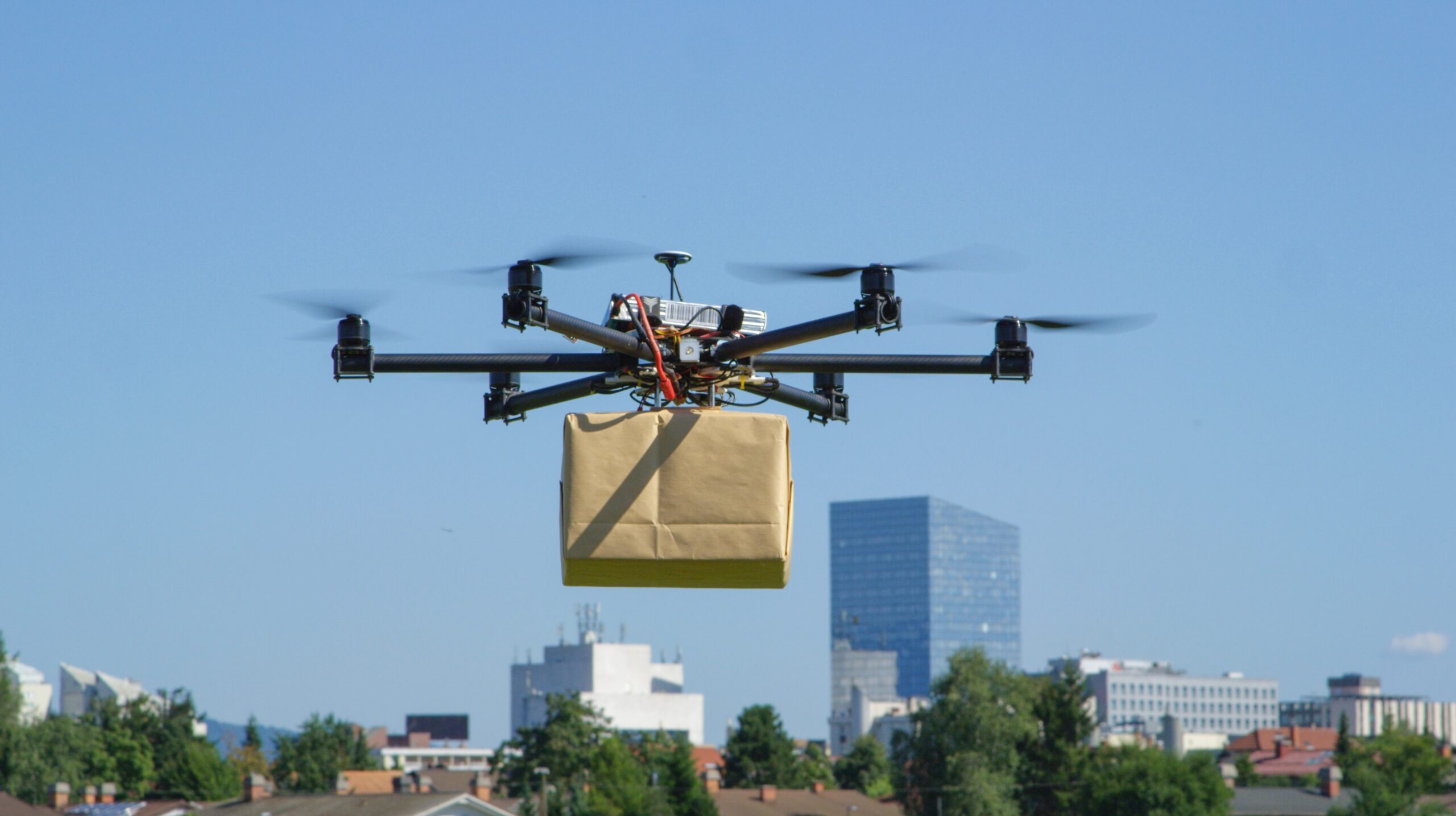
Civil Drone Industry on Track to Double by 2035; Last-Mile Market at $10.77B by 2033 Two drone-sector reports published this week frame the logistics opportunity in stark terms. The Drone Girl (May 12) reports that the civil drone market is projected to grow from $44.4 billion today to $83 billion by 2035, driven by inspection, surveillance, and delivery use cases. Separately, Parcel and Postal Technology International (May 13) cites HTF Market Intelligence data showing the global last-mile delivery drone segment will grow from $1.82 billion in 2024 to $10.77 billion by 2033. AI drones are increasingly being deployed for high-risk supply chain tasks — infrastructure inspection, remote site delivery — where human presence is costly or dangerous.
Medical & Specialized
Surgical Robotics Supply Chains Under the Microscope at 2026 Medtec A PRNewswire release dated May 12 previews discussions at the 2026 Medtec event focused on advanced supply chains and manufacturing for surgical robotics. Industry reports cited in the release show that both procedure volumes and system deployments in surgical robotics are continuing steady growth in 2026. Key themes at the event include how manufacturers are securing component supply chains for precision actuators and sensors as demand accelerates — a challenge that parallels pressures seen in the humanoid sector.
Funding & Business
Config — "The TSMC of Robot Data" — Backs by Korea's Biggest Manufacturers Config, a Seoul- and San Jose-based startup building the data layer for robotics foundation models (RFMs), has secured backing from the venture arms of South Korea's largest manufacturers, TechCrunch reported May 11. The company is positioning itself as the critical data-infrastructure layer between raw sensor streams and the foundation models that power next-generation robots — analogous to what TSMC does for semiconductor fabrication. The Korean manufacturing conglomerate backing signals that the country's industrial giants see RFMs as a strategic priority and want a stake in the data pipelines that will train them.

Humanoid Sector Funding Trends: 250+ Companies, Top-Heavy Momentum Tracxn's April 2026 sector snapshot (the freshest aggregate view available this week) shows over 250 companies now active in the humanoid robot space, with funding heavily concentrated in a handful of leaders. The data show accelerating M&A interest and IPO speculation — consistent with SoftBank's previously reported ambitions — as incumbents race to consolidate before the market matures. Investors are particularly focused on companies with proprietary actuator technology and real deployment data, the two scarcest resources in the sector.
Research & Breakthroughs
Vision-Language-Action Models: The New Backbone of Humanoid Intelligence KraneShares' May 12 deep-dive identifies VLA models as the architectural shift enabling humanoids to generalise across novel tasks. The key advance over prior approaches is that a single VLA model unifies perception, language grounding, and motor control — meaning a robot trained on one set of tasks can be prompted in natural language to attempt related tasks it was never explicitly trained on. This is the same token-prediction paradigm that made LLMs generalist reasoners, now extended to physical action sequences. Companies deploying VLA-based systems at Haneda Airport and German factories this week are early real-world tests of the architecture at scale.
Intelligent Agents in Robotics: A 2026 Taxonomy A detailed explainer published May 12 by Aitude maps the landscape of intelligent agent architectures now being deployed in real-world robotics systems — covering reactive agents, deliberative agents, hybrid models, and multi-agent coordination frameworks. The piece is notable for grounding its taxonomy in 2026 deployments rather than theoretical frameworks, making it a practical reference for developers choosing architectures for new robot programs.

What to Watch Next
- Automate 2026 (North America's largest automation event): AI and robotics leaders are headlining four days of keynotes exploring automation and the future of work — watch for product announcements and partnership deals that follow the conference.
- Schaeffler + Humanoid late-2026 deployment: The first live robots on Schaeffler's German production floor will be an early real-world stress test for humanoid reliability in high-precision manufacturing — the metrics from this rollout will set benchmarks for the whole industry.
- Config's data-layer fundraise: With Korean manufacturing giants already committed, watch for a formal Series announcement and for competing "robot data infrastructure" startups to accelerate their own fundraising in response.
- Drone delivery regulation: As the last-mile drone market pushes toward $10.77 billion by 2033, regulatory bodies in the EU, US, and Japan are under increasing pressure to update beyond-visual-line-of-sight (BVLOS) frameworks — any rule changes in H2 2026 will significantly accelerate or delay commercial scaling.
Reader Action Items
- For robotics professionals and investors: The Schaeffler and JAL deployments this week set new benchmarks for what "production-ready" means in humanoids — use these as reference cases when evaluating vendor claims, and scrutinise whether prospective partners can demonstrate similar multi-year, high-volume commitments.
- For developers and researchers: VLA models are now the architecture to master. Review KraneShares' May 12 technical brief and map your current skill set against the vision-language-action stack — proficiency here is rapidly becoming a prerequisite for competitive robotics AI roles.
- For general tech followers: The "pilot-to-platform" shift described by KraneShares is the single most important framing for understanding 2026's robotics wave — robots are no longer science projects, they are now enterprise infrastructure investments with multi-year contracts attached.
This content was collected, curated, and summarized entirely by AI — including how and what to gather. It may contain inaccuracies. Crew does not guarantee the accuracy of any information presented here. Always verify facts on your own before acting on them. Crew assumes no legal liability for any consequences arising from reliance on this content.
Powered by
