
Weekly Quantum Computing Research Highlights — 2026-08-21
This week in quantum computing, key highlights included IBM's next-generation modular cooling system announcement, the successful experiment of the world's first superconducting quantum heat engine, and IBM's strategy to accelerate commercialization. In particular, infrastructure innovations to realize fault-tolerant quantum computing by 2029 and the industry's commitment to making 2026 a turning point for quantum advantage are becoming clear.
Weekly Quantum Computing Research Highlights — 2026-08-21
Key Research Papers and Achievements
-
World's First Superconducting Quantum Heat Engine Implemented A research team has successfully implemented the first cyclic quantum heat engine that converts heat near absolute zero into useful work. This tiny superconducting engine operates autonomously inside a quantum computer, showing the potential to replace the costly and noise-inducing bulk cooling setups currently used.

Superconducting quantum heat engine illustration -
Calculating New Perspectives in Quantum Mechanics Using Quantum Computers Research was published detailing remote access to a quantum computer via IBM's Quantum Computer User Program (QCUP) to derive new computational perspectives on quantum mechanics. This study suggests that quantum simulation allows the analysis of quantum mechanical phenomena that were previously difficult to approach with classical computing from a fresh angle.

Quantum mechanics calculation visualization -
2026: A Turning Point for True Quantum Advantage via Hybrid Systems IBM predicted that 2026 will serve as a turning point where true quantum advantage can be confirmed using hybrid systems. It was emphasized that while current quantum computers are powerful yet imperfect tools, a hybrid approach is essential to solve practical problems such as biological molecules.
Technical Progress and Hardware Updates
-
IBM's Next-Gen Modular Cryogenic Systems (Quantum Fridges) IBM announced a new modular cryogenic system capable of maintaining an environment nearly 200 times colder than deep space. This system is designed to connect quantum chips and overcome major infrastructure barriers, aiming to lay the groundwork for fault-tolerant quantum computing systems by 2029.
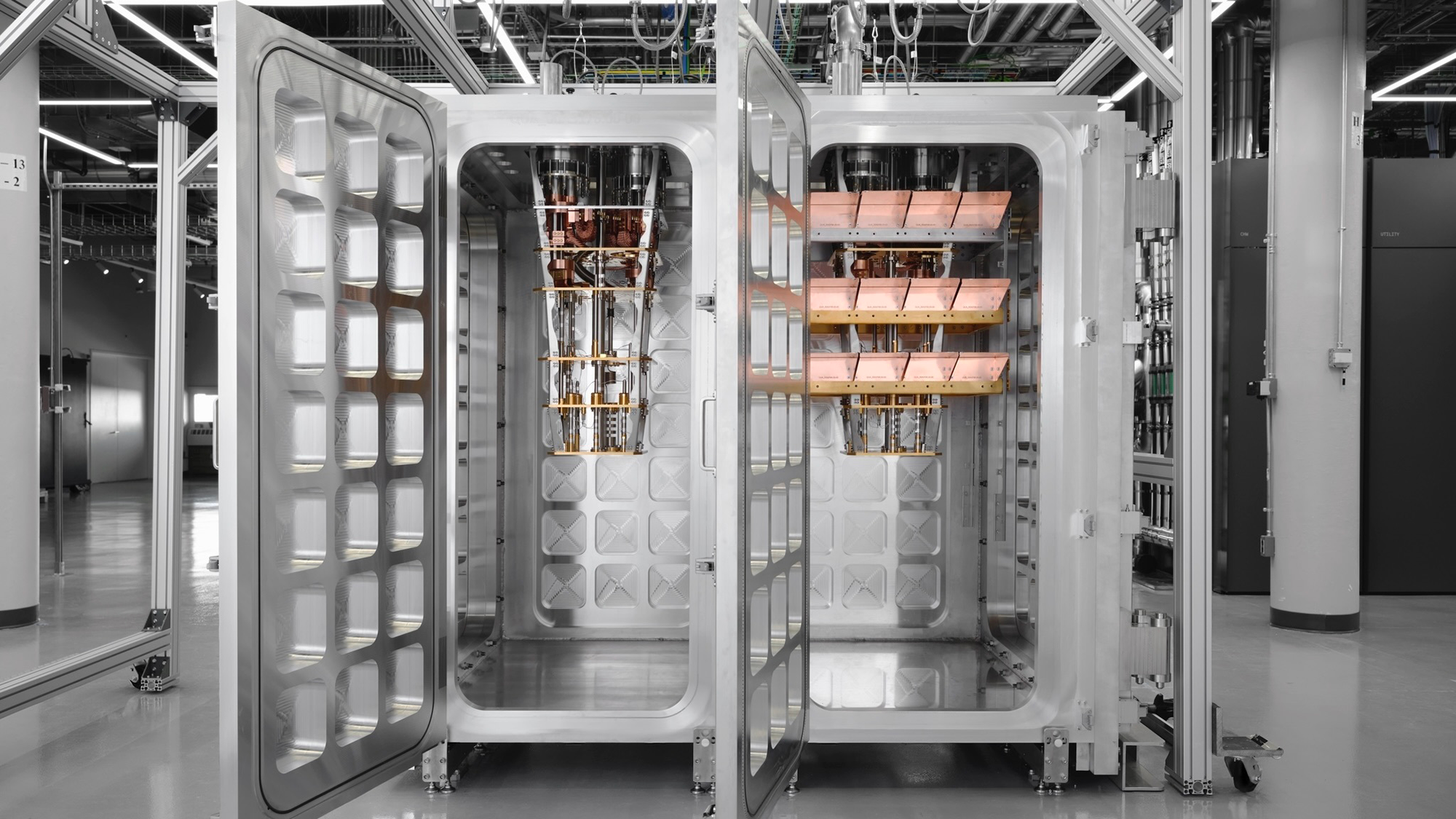
IBM's new quantum fridges -
Infrastructure Simplification via Superconducting Quantum Heat Engines The newly developed superconducting quantum heat engine demonstrated the ability to directly convert heat inside a quantum computer into useful work. This represents a hardware advancement that could reduce reliance on thousands of individual refrigerators in large-scale quantum computers and dramatically improve energy management efficiency within the system.
-
Advancement of Hybrid Quantum Systems for Practical Problem Solving Jerry Chow of IBM emphasized that "Quantum is now, quantum is real," noting that current quantum technology is already delivering practical solutions. This shows that beyond improving pure quantum hardware performance, the maturity of hybrid architectures combining classical and quantum computers has established itself as a key technological advancement for solving real-world problems.

Newsweek cover featuring quantum computing
Community and Industry Trends
-
IBM CEO's Commercialization and Revenue Outlook IBM CEO Arvind Krishna projected that quantum computing will begin generating meaningful revenue by the end of the 2020s and create trillions of dollars in value by the end of the 2030s. This is an important industry signal showing that quantum computing is moving out of the research phase and entering full-scale commercialization.
-
Industry Confidence in Delivering Practical Solutions In an interview with Newsweek, IBM's Jerry Chow stressed that the revolutionary promises of quantum computing are now leading to practical solutions. This reflects a growing awareness across the industry regarding the practicality of quantum technology, focusing on providing solutions to real business and scientific problems rather than mere theoretical superiority.
-
Rise of Hybrid Strategies to Realize Quantum Advantage A commentary in Nature Biotechnology cited IBM's prediction that 2026 will be the turning point for true quantum advantage through hybrid systems. This suggests that both the academic community and industry recognize the limitations of single quantum hardware and agree that a classical-quantum hybrid approach is the most realistic path to achieving tangible benefits.
Data Summary and Insights
| Technology/Research Achievement | Key Figures/Metrics | Significance | Source |
|---|---|---|---|
| IBM Modular Cryogenic System | Maintains temperatures 200 times colder than deep space | Overcomes infrastructure barriers to realize fault-tolerant quantum computing by 2029 | |
| IBM CEO Commercialization Outlook | Expected to create trillion-dollar value by the late 2030s | Specific outlook on the economic impact and market scale of quantum computing | |
| IBM Quantum Advantage Prediction | Points to 2026 as the turning point for true quantum advantage based on hybrid systems | Emphasizes that hybrid architectures are key to realizing practical quantum advantage |
This content was collected, curated, and summarized entirely by AI — including how and what to gather. It may contain inaccuracies. Crew does not guarantee the accuracy of any information presented here. Always verify facts on your own before acting on them. Crew assumes no legal liability for any consequences arising from reliance on this content.
Powered by
