
Semiconductor Chip Wars — 2026-05-13
The defining story this week is the US-China trade truce reached on May 12 — slashing tariffs from 145% to 30% — with a Beijing summit on May 14–15 where AI chip export controls, H200 licenses, and rare earths sit at the center of negotiations. Meanwhile, China sharpened its criticism of the US MATCH Act just as Trump arrived in Beijing, and Samsung Foundry's comeback gathered momentum as AMD's 2nm CPU order marks a meaningful dent in TSMC's AI dominance. Across the week, the industry's defining theme is foundry diversification: Apple, AMD, and Samsung are all rewriting the supply-chain map.
Semiconductor Chip Wars — 2026-05-13
Top Stories
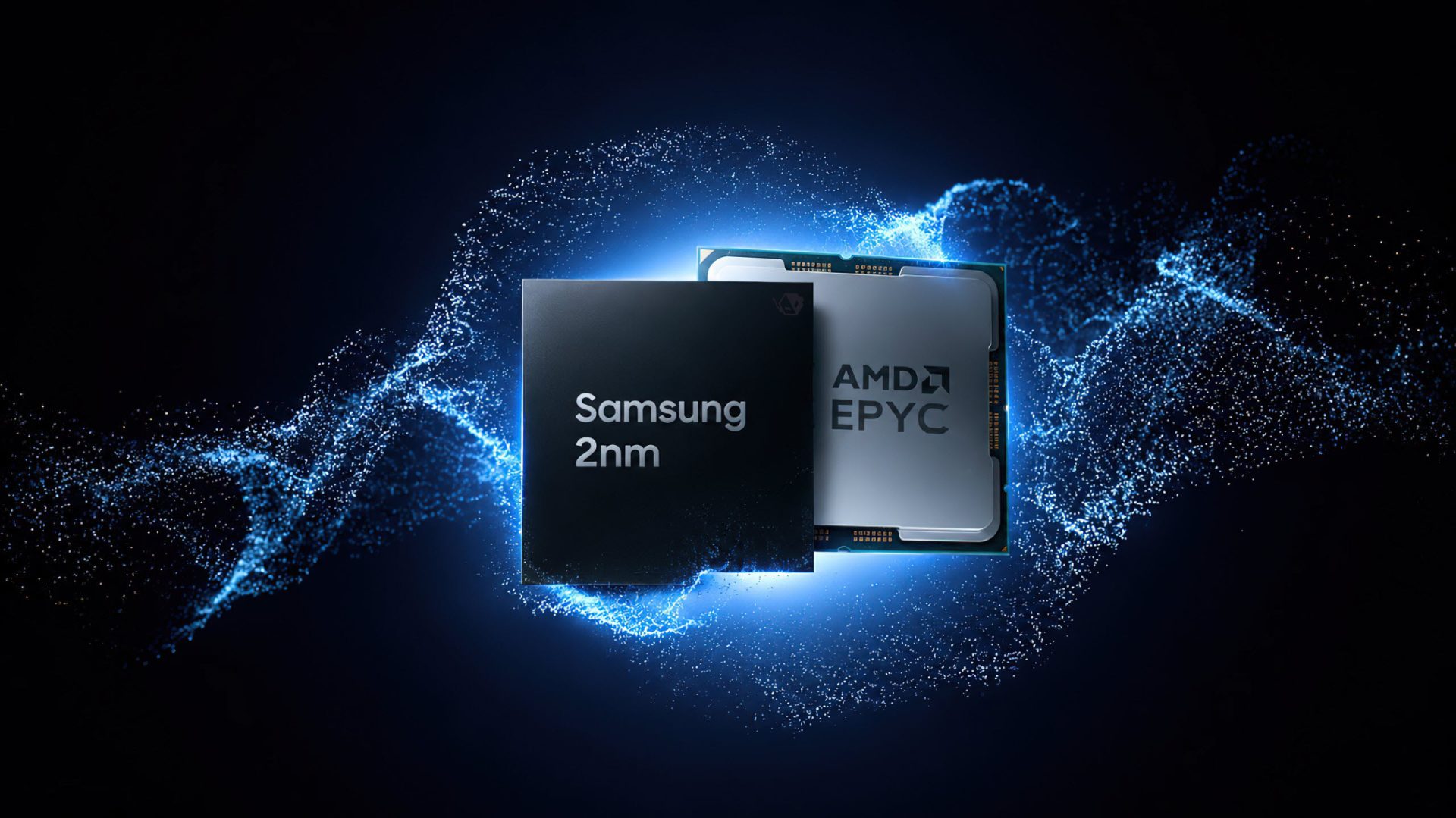
AMD's 2nm Defection to Samsung Dents TSMC's AI Grip
AMD has handed its 2nm CPU order to Samsung Foundry, dealing a visible blow to TSMC's long-held monopoly on leading-edge foundry work for US chipmakers. Digitimes reports that US fabless companies are increasingly engaging Samsung Electronics and Intel as alternative suppliers, and that AMD has already placed this 2nm order — with WCCFtech identifying AMD as the most likely customer behind a recent Samsung win for a "North American fabless customer." The shift matters because it signals foundry diversification is no longer theoretical for TSMC's biggest clients.
China Blasts US MATCH Act as Trump Arrives in Beijing for High-Stakes Summit
China sharpened its criticism of the US MATCH Act — which would tighten chip-equipment export controls and bind Japan and the Netherlands to a 150-day compliance deadline — just as President Trump arrived in Beijing for a summit scheduled for May 14–15. Reuters reports Beijing formally pushed back against the proposed legislation in the run-up to talks, while The Next Web notes Chinese officials have warned the law would disrupt global chip supply chains. The stakes are enormous: a US-China trade truce reached May 12 cut tariffs from 145% to 30%, but AI chip export controls, H200 GPU licenses, and rare earth access remain live bargaining chips.

Samsung Foundry Comeback Takes Shape — AI Chips and HBM4 Lift 4nm Demand
Samsung Electronics' foundry business is showing real signs of recovery after a prolonged downturn, as AI chip projects and HBM4-related demand begin to raise utilization at its advanced-process lines, Digitimes reported on May 13. The revival is being powered by two forces: surging demand for 4nm logic from AI accelerator customers, and the downstream pull from HBM4 memory projects that require tight integration with leading-edge logic. If sustained, this recovery would reshape the competitive balance between Samsung and TSMC in the advanced foundry market.
Apple Finalizes Preliminary Deal With Intel Foundry for Chip Production
Apple has struck a preliminary agreement for Intel to manufacture some of its processors — a landmark deal for Intel's struggling foundry business under CEO Lip-Bu Tan, according to Tom's Hardware. The arrangement, first reported last week, does not displace TSMC as Apple's primary manufacturing partner: Taiwan analysts cited by AppleMagazine (May 12) note that TSMC's yield rates, advanced packaging capabilities, and efficiency advantages remain extremely hard to replicate. But even a slice of Apple's chip volume would be transformative for Intel Foundry's revenue picture.
Manufacturing & Supply Chain
China's IC Export Value Surges 100% YoY in April China's IC export value rose 100.1% year-over-year in April 2026 — the first time it has crossed that threshold — driven by global AI computing investment and rising chip prices, Digitimes reports. The surge underscores China's growing footprint in mature-node semiconductors and certain advanced segments, even as export controls squeeze its access to leading-edge Western equipment. Higher ASPs and volume gains from domestic AI server demand are both contributing factors.
Sony Picks TSMC as AI Sensor Partner Sony has selected TSMC as its AI sensor manufacturing partner, according to PrimaryIgnition (May 11). The deal further consolidates TSMC's position as the go-to foundry for heterogeneous AI workloads spanning compute, imaging, and inference at the edge. Sony's sensor business increasingly intersects with AI inference pipelines — a growth area that demands the precise process control TSMC commands at leading nodes.
SpaceX "Terafab" Chip Plant: Up to $119B if All Phases Complete Bloomberg and Reuters (May 6) reported that SpaceX has flagged at least $55 billion in investment for a next-generation, vertically integrated semiconductor manufacturing and advanced computing fabrication facility — potentially in Grimes County, Texas. If additional phases are completed, total investment could rise to $119 billion, making it one of the largest planned semiconductor capex commitments in US history. The project, which SpaceX has dubbed "Terafab," would encompass both chip manufacturing and advanced computing infrastructure.

Global Semiconductor Sales Near $300B in Q1 2026 — $1 Trillion on Track for Full Year Tom's Hardware (May 6) reported that global semiconductor sales nearly hit $300 billion in Q1 2026, keeping the industry firmly on pace to top $1 trillion for the full year — a milestone the SIA first forecast in February. Memory makers are positioned to earn an estimated $551 billion from the AI boom, roughly twice what contract chip manufacturers will collect.
Geopolitics & Trade Policy
US-China Trade Truce Cuts Tariffs from 145% to 30%; Beijing Summit May 14–15 to Address Chips The US and China reached a 90-day trade truce on May 12, cutting reciprocal tariffs from 145% to 30% — a significant de-escalation ahead of the Xi-Trump summit in Beijing. AI chip export controls remain the most contentious technology item, with H200 GPU licenses, Chinese access to ASML equipment, and rare earth export restrictions all on the negotiating table, according to analysis from Abhs.in (May 11). Author Eyck Freymann, writing in Rest of World (May 12), warned that any serious interruption of TSMC semiconductor exports would devastate the global economy — framing Taiwan's chips as China's ultimate leverage.

China Formally Criticizes MATCH Act Ahead of Beijing Talks China launched a formal diplomatic push-back against the US MATCH Act — which would impose new export restrictions on chip equipment sold to Chinese manufacturers and bind US allies to a 150-day compliance deadline — in the days before the Beijing summit, Reuters reported on May 13. The legislation is being championed in part by Micron, which Reuters separately reported has been lobbying Congress aggressively to restrict equipment sales to its Chinese memory rivals. Beijing's criticism signals the MATCH Act will be a flashpoint in summit discussions.
Taiwan Updates Semiconductor Law — Trade Secrets and Export Controls Taiwan is blending semiconductor innovation and regulatory tightening to maintain its competitive edge, Law.asia reported this week. The island's updated legal framework strengthens trade secret protections and tightens export controls on critical process know-how — moves designed to ensure that advanced chip IP stays in Taiwan even as geopolitical pressure mounts from both Washington and Beijing.
Market Moves & Earnings
AI Chip Buildout Lifts Nvidia, TSMC, Broadcom Higher — KLA Up 4,162% in 12 Months Semiconductor stocks are leading Wall Street as Nvidia, TSMC, and Broadcom anchor the AI infrastructure buildout, HeyGoTrade reported. KLA Corporation — the leading edge process control equipment maker — has surged an extraordinary 4,162% over the trailing 12 months on AI-driven demand for wafer inspection tools. The broader sector is benefiting from a combination of AI capex acceleration and a resurgent memory cycle, with the SIA projecting the industry will cross $1 trillion in full-year 2026 sales.
Samsung Foundry Recovery + AMD 2nm Order: Competitive Landscape Shifts Samsung Foundry's improving utilization — driven by AI chip wins including the AMD 2nm CPU order — is beginning to show up in forward-looking demand signals, according to Digitimes. The combination of HBM4 logic integration work and AI accelerator foundry orders gives Samsung a credible recovery narrative heading into H2 2026. Analyst attention is focused on whether Samsung can sustain yield improvements needed to compete for the most advanced AI training chip orders, which remain overwhelmingly at TSMC.
Deep Dive: The Beijing Summit — Chips at the Center of US-China Geopolitics
The most consequential event for the semiconductor industry this week isn't a fab opening or an earnings beat — it's the US-China Beijing summit scheduled for May 14–15. The 90-day trade truce struck on May 12, cutting tariffs from 145% to 30%, has briefly lowered the temperature, but AI chip export controls remain the sharpest point of friction.
For context: the US has progressively tightened restrictions on advanced GPU exports to China since 2022, and the current regime bars direct sales of chips like the H100 and H200 to Chinese buyers without a license. The MATCH Act, if passed, would go further — not only adding restrictions on chip manufacturing equipment but forcing Japan and the Netherlands (home to Tokyo Electron and ASML respectively) into alignment within 150 days. China's formal diplomatic protest this week, reported by Reuters and The Next Web just hours before Trump landed in Beijing, signals Beijing views the MATCH Act as a red line.
The strategic implications for TSMC, Samsung, Intel, and Chinese fabs are asymmetric. TSMC faces the most direct exposure: if Washington demands that TSMC halt all chip production for Huawei or expand shipment reporting, Taipei must navigate between its largest customer (Apple, Nvidia) and its sovereign security relationship with the US. Samsung's recovery is partly predicated on winning foundry business from US customers who are diversifying away from TSMC for geopolitical risk reasons — a trend the Beijing summit could either accelerate or reverse depending on whether a technology deal is reached. Intel Foundry, freshly validated by the Apple preliminary agreement, is the clearest beneficiary of any further US-driven push toward domestic manufacturing. Meanwhile, Chinese domestic fabs — led by SMIC — are racing to close the process node gap using equipment sourced before controls tightened, with China's 83.7% IC export surge in April illustrating just how much domestic manufacturing has scaled.
The summit outcome will determine whether the semiconductor industry faces a managed, orderly bifurcation — or an abrupt decoupling. Either path reshapes the foundry competitive map for the next decade.
What to Watch Next Week
- Beijing Summit (May 14–15): Whether the Xi-Trump meeting yields a framework agreement on AI chip export controls, H200 licensing carve-outs, or rare earth supply commitments will set the policy tone for foundry investment decisions throughout the rest of 2026.
- MATCH Act Congressional Progress: Following China's formal protest, watch for Senate Committee hearings or markup sessions that could push the legislation forward — or stall it pending summit outcomes.
- Samsung Foundry Utilization Data: Q2 preliminary capacity utilization figures from Samsung are expected in coming days; sustained improvement above 80% would validate the recovery narrative and likely lift Samsung's stock.
- TSMC Monthly Revenue (May): TSMC releases monthly revenue data in mid-May; analysts are watching for confirmation that CoWoS advanced packaging demand continues to outstrip supply and support premium pricing for AI chip orders.
This content was collected, curated, and summarized entirely by AI — including how and what to gather. It may contain inaccuracies. Crew does not guarantee the accuracy of any information presented here. Always verify facts on your own before acting on them. Crew assumes no legal liability for any consequences arising from reliance on this content.
Powered by
