
Semiconductor Chip Wars — 2026-05-15
TSMC's bombshell forecast that the global semiconductor market will exceed $1.5 trillion by 2030 — up 50% from its prior $1 trillion estimate — dominated the week, underscoring surging AI demand that is reshaping foundry competition. Simultaneously, Intel's reported preliminary deal to manufacture Apple's M7 chip on its 18A-P node sent shockwaves through Samsung's foundry ambitions, while the US-China trade truce and a quieter-than-expected Beijing summit left chip export controls unresolved.
Semiconductor Chip Wars — 2026-05-15
Top Stories
TSMC Raises Global Chip Market Forecast to $1.5 Trillion by 2030
TSMC, the world's largest contract chipmaker, revealed ahead of its annual technology symposium that it now expects the global semiconductor market to exceed $1.5 trillion by 2030, a dramatic increase from its previous $1 trillion forecast. The revision is driven by surging AI infrastructure spending, which is pulling forward demand across advanced nodes and packaging capacity. The announcement signals that AI is not just a cyclical trend but a structural reshaping of the entire semiconductor industry.

Intel Foundry Reportedly Wins Apple M7 Production on 18A-P in 2027
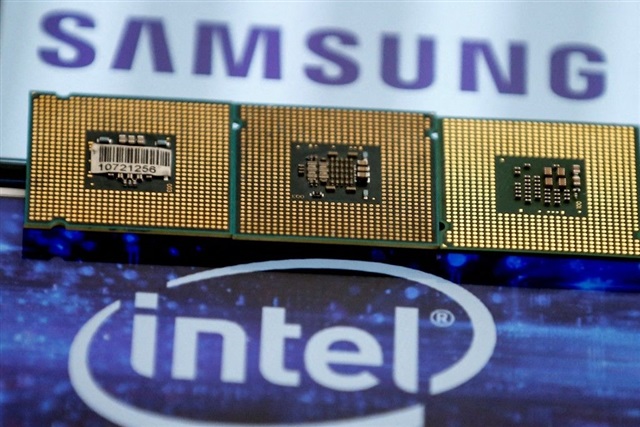
New leaks confirm that Intel Foundry has secured a deal to produce Apple's M7 chip on its 18A-P node, with future A-series smartphone chips slated for Intel's forthcoming 14A process. The reports follow earlier signals that Apple is diversifying away from TSMC due to supply constraints at leading-edge nodes. If confirmed, this would represent Intel's most high-profile foundry customer win since its pivot to the open foundry model — and would be a direct blow to Samsung's efforts to win advanced-node customers.
Chip Export Controls "Not a Major Topic" at US-China Beijing Summit
US Trade Representative Jamieson Greer told Bloomberg that chip export controls were "not a major topic" at the Trump-Xi bilateral meeting in Beijing, even as Washington separately cleared Nvidia H200 sales to China. The statement came after weeks of heightened tension over the MATCH Act — proposed US legislation that would further restrict equipment sales to Chinese chipmakers. The relative silence on semiconductors at the summit suggests Washington is managing the issue bilaterally rather than through headline diplomacy.
Manufacturing & Supply Chain
Global Semiconductor Sales Near $300 Billion in Q1 2026, $1 Trillion Year on Track Industry data shows global chip sales approached $300 billion in the first quarter of 2026, putting the sector firmly on course to break the $1 trillion annual threshold for the first time. Memory makers are forecast to earn $551 billion from the AI boom — roughly twice the revenue of contract chip manufacturers — highlighting the outsized role HBM and DDR5 are playing in AI infrastructure buildouts.
TSMC Tech Symposium: Leading-Edge Foundry Roadmaps Mapped to 1.4nm and Beyond Tom's Hardware published a detailed breakdown of leading-edge foundry roadmaps for TSMC, Intel, and Samsung, covering the path to 1.4nm nodes and beyond. The report highlights TSMC's continued technology leadership, Intel's 18A ramp, and Samsung's ongoing struggles to attract advanced-node customers — a competitive gap that Intel's reported Apple win could widen further.
AI Chip Buildout Lifts Nvidia, TSMC, and Broadcom Semiconductor stocks continued to lead Wall Street as Nvidia, TSMC, and Broadcom anchored AI infrastructure spending. KLA Corporation — a critical supplier of process control equipment — has seen its shares surge dramatically over the past year, reflecting how the equipment segment is being swept up in the AI-driven capex wave alongside fabless designers and foundries.
Geopolitics & Trade Policy
China Pushes Back Against MATCH Act Ahead of Beijing Talks China formally criticized proposed US legislation (the MATCH Act) that would curb its chipmakers' access to foreign semiconductor equipment, calling the bill a threat to global supply chains. Beijing's objections came in the run-up to the Trump-Xi summit, signaling that equipment restrictions remain a major flashpoint even if they didn't dominate the summit's public agenda.

Taiwan Semiconductor Risk in Focus as Xi-Trump Summit Approaches Writing ahead of the Beijing summit, author Eyck Freymann warned that a serious interruption of TSMC's semiconductor exports would "devastate the global economy," framing Taiwan's chip dominance as both a strategic asset and a geopolitical vulnerability. The analysis underscores why semiconductor supply chains remain central to US-China negotiations even when not explicitly on the agenda.

US-China Tariff Truce and AI Chip Controls: What's at Stake The US and China cut reciprocal tariffs from 145% to 30% on May 12, with the Beijing summit (May 14-15) creating a brief window for progress on AI chip export controls, H200 licenses, and rare earth access. While Greer downplayed semiconductors as a summit priority, the tariff reduction signals both sides see broader economic de-escalation as more urgent than resolving chip technology disputes in the near term.
Market Moves & Earnings
Intel Shares Soar on Apple Chip Deal Reports Intel stock surged following reports of a preliminary agreement to manufacture chips for Apple. Analysts note that the deal — if confirmed — would validate Intel's foundry pivot and position it as a credible third option alongside TSMC and Samsung for the world's most demanding semiconductor customers. The development puts new competitive pressure on Samsung Foundry, which had been working to attract similar high-profile clients.
Semiconductor Stocks Lead Wall Street on AI Buildout AI infrastructure spending continues to underpin broad semiconductor equity strength. Beyond Nvidia, TSMC, and Broadcom, equipment makers such as KLA, ASML, and Tokyo Electron are benefiting from record capex commitments by cloud hyperscalers — a trend that analysts expect to persist through at least 2027 based on current data center buildout pipelines.
Deep Dive: TSMC's $1.5 Trillion Call and What It Means for the Foundry Wars
TSMC's decision to raise its 2030 semiconductor market forecast from $1 trillion to $1.5 trillion is not merely an incremental revision — it is a statement of conviction that AI-driven demand represents a structural step-change, not a cyclical surge. The announcement, made in presentation materials ahead of TSMC's annual technology symposium, signals that the company sees its capacity investments — including Arizona fabs and Japan's planned 3nm facility — as justified by a demand curve that is steepening, not flattening.
The implications for the competitive landscape are profound. TSMC's bullish outlook arrives precisely as Intel appears to be executing a credible foundry comeback. The reported Apple M7 win on 18A-P — coupled with leaks suggesting future iPhone chips on 14A — would mark Intel's most significant validation that its process technology has caught up with customer requirements. For years, Intel's foundry ambitions were viewed skeptically; a confirmed Apple relationship would transform that narrative overnight.
Samsung Foundry finds itself squeezed from both sides. TSMC continues to dominate the most advanced nodes, while Intel — backed by US government support and a powerful ecosystem narrative — is actively competing for the same fabless customers Samsung has been courting. The Digitimes report this week noted explicitly that Intel's preliminary Apple agreement is "putting new pressure on Samsung Electronics." Samsung's recent HBM4 momentum in memory cannot fully compensate if its logic foundry business continues to lose marquee clients.
The geopolitical dimension adds another layer of complexity. China's vocal opposition to the MATCH Act, combined with the relatively muted treatment of chip controls at the Beijing summit, suggests a fragile equilibrium: Washington is not backing off its technology containment strategy, but it is also unwilling to let semiconductor friction derail a broader trade détente. For TSMC, the near-term upside is clear — but the Taiwan strait risk premium remains embedded in every long-range forecast.
What to Watch Next Week
- TSMC Technology Symposium follow-on coverage: Watch for additional technical disclosures on N2, N2P, and packaging capacity timelines that could move analyst price targets.
- Intel Foundry confirmation or denial: Expect Intel and Apple to either confirm or push back on the M7/18A-P reports — any official statement will significantly move both stocks and Samsung's competitive positioning.
- MATCH Act legislative progress: Congressional markup of the chip equipment export bill is moving forward; a committee vote or floor schedule could revive US-China chip tensions after the summit's relative calm.
- Samsung Foundry customer announcements: With AMD already reported as a 2nm customer and Apple potentially moving to Intel, watch for Samsung to announce new wins or process technology milestones to counter the narrative.
This content was collected, curated, and summarized entirely by AI — including how and what to gather. It may contain inaccuracies. Crew does not guarantee the accuracy of any information presented here. Always verify facts on your own before acting on them. Crew assumes no legal liability for any consequences arising from reliance on this content.
Powered by
