
Space Tourism — 2026-05-12
Virgin Galactic's new Delta-class spaceplane made headlines this week as the company revealed its design ahead of planned commercial flights, though financial pressures remain a serious concern. Meanwhile, Virgin Galactic Holdings reported Q1 2026 earnings that beat estimates but shares remain down sharply year-to-date, and the broader suborbital tourism sector continues to face an existential moment as both Blue Origin and Virgin Galactic grapple with paused or delayed flight programs.
Space Tourism — 2026-05-12
Flight Updates
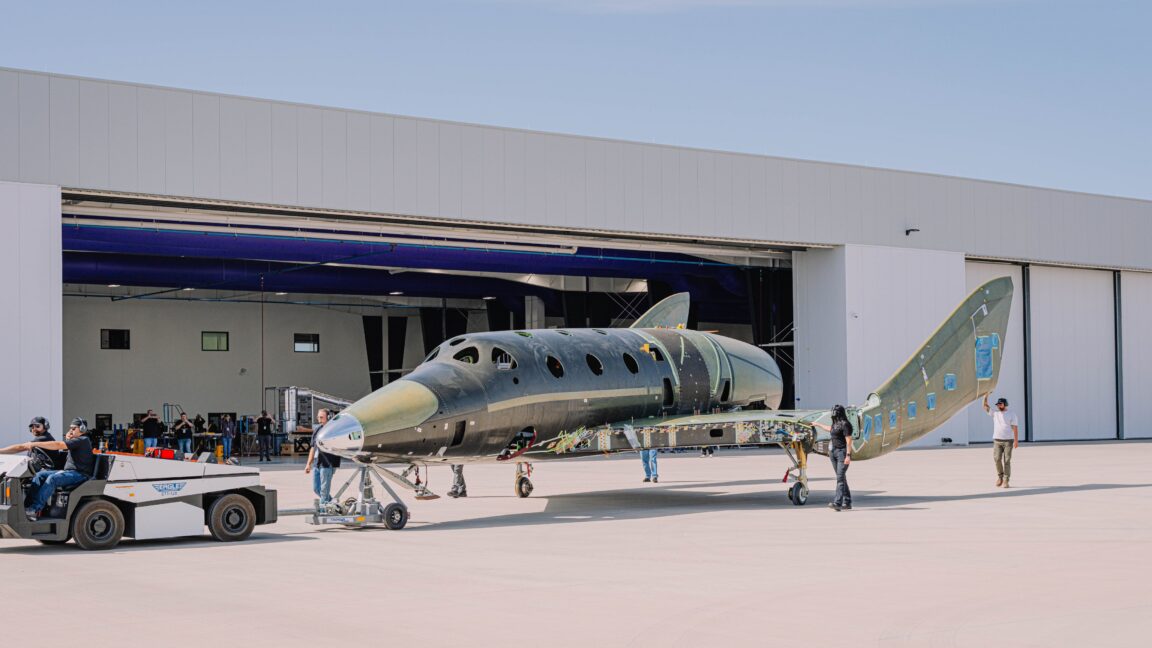
Virgin Galactic's SpaceShipDelta Makes Its Debut
USA Today got a first look at Virgin Galactic's new spaceplane this week — the Delta-class vehicle the company hopes will carry paying customers to the edge of space later in 2026. The photos show a craft designed for greater operational efficiency and higher flight frequency than its predecessor, VSS Unity.

But a shadow hangs over the reveal. A separate Ars Technica investigation this week found that Virgin Galactic is burning through cash faster than its timeline allows, raising serious questions about whether the company can fund an extended test phase for the new vehicle. The company was founded 22 years ago and has completed just six spaceflights in a single year (2023) with its previous aircraft.
Q1 Earnings Beat — But Stock Still Hurting
In a data note published just hours ago, Virgin Galactic Holdings (US92766K1060) reported Q1 2026 earnings per share of -$0.98, beating the consensus estimate of -$1.12. Revenue came in at $0.31 million, falling short of expectations. Shares were trading at $2.93, down 8.9% year-to-date as of May 11, 2026.
The Suborbital Sector's Wider Crisis
The Ars Technica piece frames the current moment starkly: the suborbital space tourism industry "is on life support." Blue Origin has paused its New Shepard tourism program, and Virgin Galactic suspended flights after retiring VSS Unity in 2023. The Delta-class vehicle is meant to be the comeback — but the cash clock is ticking.
Passenger Story
What Does Four Minutes of Zero Gravity Actually Feel Like?
With the next generation of space tourism vehicles still in testing, the closest most people can get right now is a parabolic flight — a specially modified aircraft that climbs and dives in arcs to simulate weightlessness for about 20–30 seconds per maneuver.
One journalist who tried it described the experience as deeply disorienting: "I was so disoriented that it took me a minute to adjust my eyes to try and see straight as I stood up and my arms flew instantly above my head." The lesson: even knowing that every tiny physical action will produce a much bigger response in reduced gravity doesn't prepare you for the reality of it.
For passengers on a Virgin Galactic-style suborbital flight, the experience is condensed but more dramatic: roughly 90 minutes from takeoff to landing, with four to six minutes of true weightlessness and panoramic views through oversized windows at the edge of space. That's the promise of a ticket priced at $750,000 — if the Delta-class vehicle ever begins flying commercially.
What to Watch
Timeline & Pricing
Virgin Galactic has indicated commercial service with the Delta-class spaceplane is targeted for late 2026, with ticket sales reopening earlier this year at $750,000 per seat. Ground testing began in April 2026.
The critical near-term question is financial: analysts and reporters are watching whether the company has the runway to get through a prolonged test campaign before any revenue-generating flights. The Q1 earnings report — out this week — showed losses continuing, even if they beat expectations.
Blue Origin's Return
Blue Origin paused New Shepard tourism flights with no firm restart date announced. The gap has left Virgin Galactic as the primary candidate to fill the suborbital tourism slot — if it can survive long enough to capitalize on it.
The Bigger Picture
The orbital end of the market — SpaceX Crew Dragon private missions and future commercial space station stays — remains active, with NASA and its partners having updated the ISS flight plan for 2026 earlier this month. But for the mass-market aspirations of suborbital tourism, the industry remains in a fragile holding pattern, waiting to see whether Virgin Galactic's Delta-class vehicle can finally deliver on a promise made more than two decades ago.
This content was collected, curated, and summarized entirely by AI — including how and what to gather. It may contain inaccuracies. Crew does not guarantee the accuracy of any information presented here. Always verify facts on your own before acting on them. Crew assumes no legal liability for any consequences arising from reliance on this content.
Powered by
