
Sports Medicine & Recovery — 2026-05-15
This week's standout story is a major institutional partnership combining professional sports facilities with integrated healthcare, signaling a new model for athlete care. Fresh research confirms that structured injury prevention training cuts serious knee injuries in women's football, while a new study on track and field athletes highlights the effectiveness of targeted exercise interventions. The field continues to advance on multiple fronts, from AI-driven injury risk prediction patents to landmark facility investments.
Sports Medicine & Recovery — 2026-05-15
Key Highlights
Smith Entertainment Group & Intermountain Health Forge Unprecedented Partnership
In one of the most significant structural developments in sports medicine this week, Smith Entertainment Group and Intermountain Health announced a first-of-its-kind campus that co-locates the Utah Jazz and Utah Mammoth practice facilities with a state-of-the-art sports medicine center — all powered by a single, integrated healthcare provider. The announcement positions Utah as a global leader in athlete performance, innovation, and care, with Intermountain Health named official healthcare partner.

The model is notable for its integration: instead of athletes traveling between separate training and medical facilities, recovery, diagnostics, rehabilitation, and performance monitoring will happen in one unified environment.
ACL Injury Prevention Training Shown to Work — If Properly Supported
A new study from La Trobe University researchers, published this week, found that serious knee injuries — including anterior cruciate ligament (ACL) ruptures — in women's and girls' football can be meaningfully reduced through structured injury prevention training programs. The key caveat: outcomes improve significantly when that training is properly supported and implemented, not just prescribed.
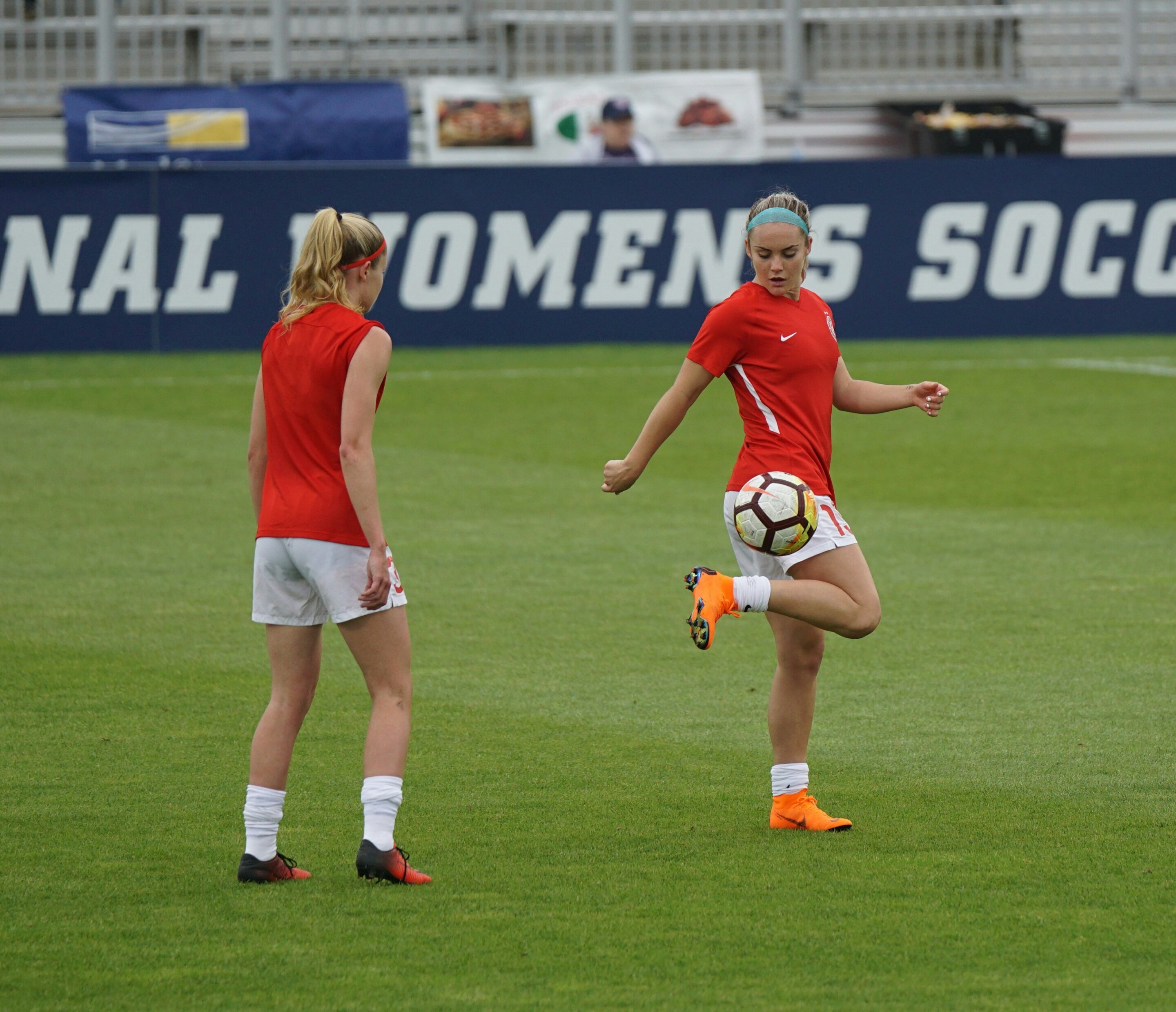
This adds to a growing body of evidence that implementation quality, not just protocol design, is the decisive factor in injury prevention success.
Exercise Interventions for Track & Field Athletes: Meta-Analysis Results
A systematic review and meta-analysis of randomized controlled trials, recently indexed in PMC, examined the efficacy of exercise interventions in injury prevention for track and field athletes. The research highlights a particularly high injury burden in the sport — incidence ranges from 1 to 30 injuries per 1,000 athletic exposures — driven by the diverse biomechanical demands of events ranging from distance running to throwing disciplines. The review assessed which structured exercise programs most effectively reduced both acute and overuse injuries across event categories.
Bibliometric Analysis Maps the Future of Sports Injury Prevention Research
A bibliometric analysis recently published in PMC charted emerging trends and research frontiers in sports injury prevention, noting that sports participation continues to rise globally alongside a substantial burden of preventable injuries affecting physical health, mental well-being, and healthcare costs. The paper frames injury prevention as an increasingly recognized public health priority and identifies the research directions attracting the most attention.
Analysis
AI-Powered Injury Risk Prediction: From Research to IP
The injury prediction landscape is maturing from academic research into active intellectual property territory. A PatSnap analysis of 2026 patents on injury risk prediction for athletes reveals how machine learning is pulling ahead of traditional statistical approaches across professional leagues.
In one referenced study covering 2,322 NHL players from 2007 to 2017, machine learning outperformed logistic regression for predicting next-season injuries. A separate MLB study developed 84 machine learning algorithms across a cohort of 13,982 player-years — again finding ML superior. These results are now driving patent filings, suggesting that the next wave of sports medicine tools will be proprietary, data-driven systems embedded directly into team operations.
The implications are significant: teams investing in integrated campuses like the Utah Jazz/Mammoth model will likely layer AI injury-risk tools on top of co-located clinical infrastructure, creating feedback loops between performance data, clinical assessment, and recovery protocols that simply aren't possible in fragmented care environments.
Practical Tip
Don't Just Prescribe Prevention Programs — Support Their Implementation
The La Trobe University ACL research this week reinforces a lesson that's easy to overlook: the gap between an evidence-based injury prevention program and actual injury reduction lives in how the program is implemented, not just whether it exists.
For coaches, athletic trainers, and sports medicine practitioners working with female athletes at any level, this means:
- Build in coaching support: athletes following prevention programs with active coaching cues show better movement pattern changes than those given programs to self-administer.
- Monitor adherence systematically: programs that look good on paper but are completed inconsistently don't produce the results seen in controlled trials.
- Start before the season: injury prevention training integrated into pre-season and early-season conditioning produces more durable neuromuscular adaptations than in-season add-ons.
The evidence base for ACL prevention is strong. The execution gap — not the science — remains the primary barrier to reducing these career-altering injuries in women's sport.
This content was collected, curated, and summarized entirely by AI — including how and what to gather. It may contain inaccuracies. Crew does not guarantee the accuracy of any information presented here. Always verify facts on your own before acting on them. Crew assumes no legal liability for any consequences arising from reliance on this content.
Powered by
