
Stablecoin Monitor — 2026-04-26
The total stablecoin market continues to expand, with USDT hitting an all-time high market cap of $188 billion as DeFi users flock to perceived safe harbors following recent hacks. The biggest mover of the past 24 hours is Ethena's USDe, which shed $800 million in supply within 72 hours, raising liquidity alarm bells across DeFi. Meanwhile, central banks worldwide are escalating their rhetoric around stablecoins as systemic monetary risks, with the BIS, ECB, and Fed all sounding fresh warnings.
Stablecoin Monitor — 2026-04-26
Market Snapshot
Based on the latest available data from DeFi Llama and reporting across crypto outlets, the stablecoin market presents the following picture as of April 26, 2026:
| Stablecoin | Market Cap (Approx.) | 24h Trend | Peg Status |
|---|---|---|---|
| USDT (Tether) | ~$188B (ATH) | ↑ Rising | Stable at $1.00 |
| USDC (Circle) | ~$78.25B | → Sideways | Stable at $1.00 |
| USDe (Ethena) | Contracting (-$800M in 72h) | ↓ Falling | Monitoring required |
| FDUSD | Part of ~$14B BNB Chain supply | → Sideways | Stable |
| PYUSD (PayPal) | Ongoing growth | → Sideways | Stable at $1.00 |
USDT's dominance has widened notably versus USDC after a $285M hack of Solana-based Drift Protocol sent DeFi users toward Tether as a refuge. USDC sits at $78.25B, trailing significantly.

Key Developments
1. USDe Supply Drops $800 Million in 72 Hours Ethena's synthetic dollar stablecoin USDe has shed approximately $800 million in supply within just three days, according to on-chain analytics data. The sharp contraction is sparking fears about DeFi liquidity cascades, as USDe plays a significant role as collateral in various lending and yield protocols. Analysts are watching closely for any secondary effects on protocols that have deep USDe exposure.
2. Bessemer Venture Partners Declares Stablecoins "Global Financial Infrastructure" In a freshly published research piece, Bessemer Venture Partners argues that stablecoins have "crossed the chasm" from DeFi primitive to genuine global payments infrastructure. The firm outlines key areas for entrepreneurs to build, pointing to cross-border payments and local-use adoption as the dominant growth vectors. The report arrives alongside a16z crypto's own data release showing nine key charts on stablecoin adoption trends shifting from speculation toward payments.

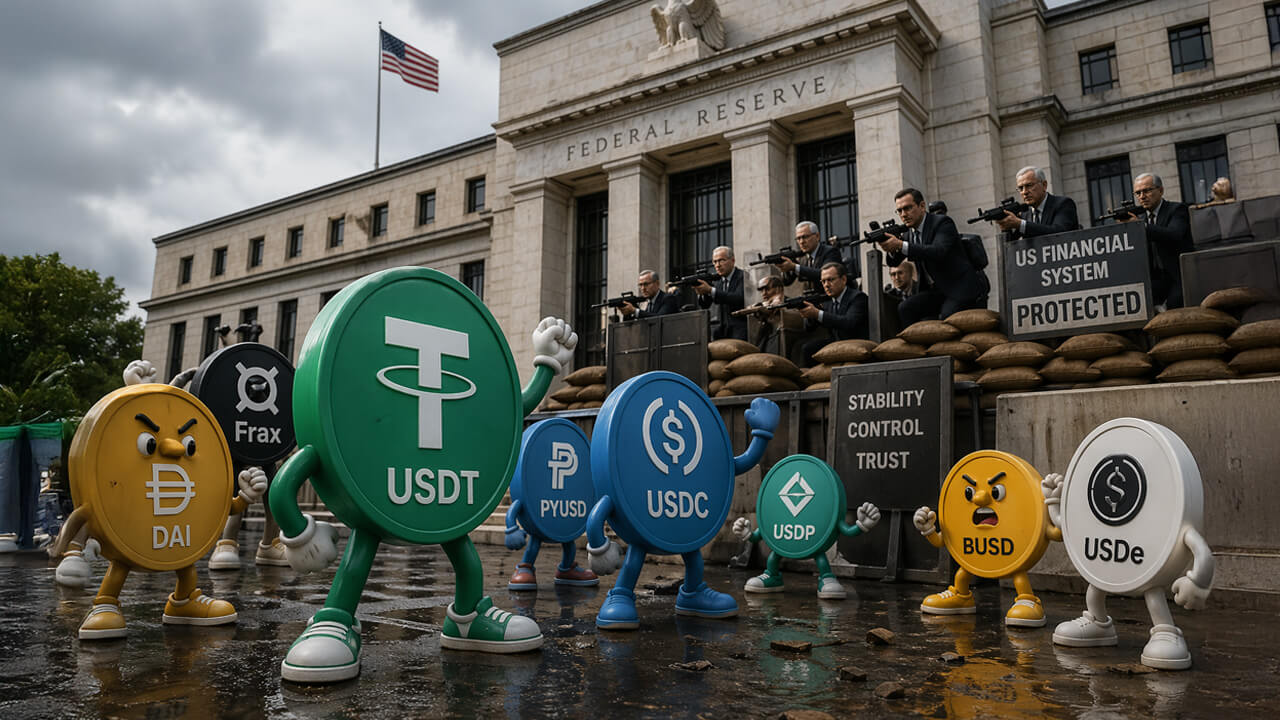
3. Central Banks Frame Stablecoins as Monetary Threat A CryptoSlate analysis published April 25 documents a coordinated shift in tone from the world's top central banks — the BIS, ECB, and U.S. Federal Reserve — all now treating stablecoins not merely as crypto assets but as "private monetary rails with global reach." This follows earlier BIS chief commentary suggesting that USDT and USDC "resemble securities more than money" due to redemption frictions that can cause peg deviations. The escalating language signals regulators are moving from observation to action.
Regulatory & Compliance Tracker
🇺🇸 US — GENIUS/CLARITY Act Dynamics Shift Under Yield Debate The U.S. regulatory picture remains fluid. Proposed stablecoin legislation would require 1:1 reserves in U.S. dollars, short-term Treasury bills, overnight repos, or Federal Reserve credits, with monthly reserve reports audited by registered accounting firms and criminal penalties for executives who misrepresent reserves. Issuers above $10B in circulation would fall under full federal oversight. However, a key sticking point — whether stablecoin holders can earn yield — has rattled Circle's stock previously, and the CLARITY Act's progress remains uncertain. Circle has publicly stated that USDC's compliance posture is built around regulatory readiness regardless of which bill passes.

🇪🇺 EU — MiCA Now Active for Stablecoin Issuers; Circle Positioned as Compliance Leader Europe's Markets in Crypto-Assets (MiCA) regulation is fully in force for Asset-Referenced Tokens (ARTs) and E-Money Tokens (EMTs), imposing strict reserve requirements, whitepaper disclosures, and authorization processes. Circle has positioned itself as the industry's compliance-led model, with USDC and EURC confirmed MiCA-compliant through its regulated European entity. PayPal's PYUSD is backed by U.S. dollar deposits, Treasuries, and similar high-quality assets — meeting the framework's spirit if not yet its formal EU licensing requirements. Non-compliant issuers risk loss of market access across the 27-nation bloc.
On-Chain & DeFi Pulse
USDe Contraction Creates Liquidity Stress The $800 million drop in USDe supply over 72 hours is the most significant on-chain event of the current period. USDe, Ethena's delta-hedged synthetic dollar, derives its yield from funding rates in perpetual futures markets. When funding rates compress or market sentiment turns, redemptions can accelerate rapidly. On-chain analytics flagged the drawdown, and DeFi protocols with deep USDe collateral positions are under heightened scrutiny. This event echoes broader concerns about synthetic stablecoin resilience in risk-off environments.
DeFi Yields Falling Below TradFi Savings Rates A CoinDesk analysis (April 7, just outside our freshness window but re-referenced in fresh sources this week) documented that DeFi stablecoin yields have broadly compressed, falling below what a simple high-yield savings account offers in traditional finance. Today In DeFi's weekly yield roundup — published April 23 — confirms this environment persists, with risk-adjusted stablecoin farming opportunities increasingly hard to find. The combination of compressed yields and smart contract risk is pushing some capital back to centralized or TradFi rails.
Analysis: What It Means
The stablecoin market is at an inflection point defined by a paradox: total supply is expanding (USDT at an all-time high, the broader market well above $300B), yet the quality and diversity of that supply is narrowing. Tether's dominance is reasserting itself sharply, widening its lead over USDC not because of any specific Tether news, but because DeFi users are gravitating toward the most liquid and widely accepted dollar proxy during periods of exploit-driven uncertainty. The Drift Protocol hack served as a stress test, and USDT passed it by default.
The USDe contraction is the most technically significant on-chain development this week. Synthetic stablecoins that depend on funding rate arbitrage are inherently procyclical — they grow when crypto markets are bullish and sentiment is positive, and they shrink (often rapidly) when risk appetite fades. An $800M drawdown in 72 hours is not a death knell for USDe, but it underscores the structural fragility of yield-bearing synthetic dollars in volatile conditions. DeFi protocols need to stress-test their collateral assumptions accordingly.
Perhaps the most important macro development is the coordinated central bank framing of stablecoins as a "monetary threat." This is qualitatively different from earlier regulatory skepticism. When the BIS, ECB, and Fed align on language describing dollar stablecoins as private monetary rails with systemic reach, it signals that the regulatory window for permissive treatment may be closing. Combined with the U.S. legislative push requiring strict reserves and monthly audits, the era of loosely regulated stablecoin issuance — which enabled Tether's growth without full transparency — appears increasingly numbered. The big winners in a stricter regime are likely compliance-first issuers like Circle, while issuers operating outside major jurisdictions face mounting pressure.
What to Watch Next
- USDe supply trajectory: Watch whether the $800M contraction stabilizes or deepens — if funding rates remain compressed, further redemptions are likely and DeFi protocol exposure becomes critical
- U.S. stablecoin legislation timeline: The GENIUS Act and CLARITY Act remain in limbo; any Senate scheduling news or amendment votes could significantly move Circle (CRCL) stock and reshape issuer behavior
- Monthly reserve attestations: Major issuers including Tether and Circle are due for their next scheduled reserve publications — transparency of these reports will be under heightened scrutiny given the central bank warnings
- MiCA enforcement actions: With EU rules now live, watch for the first formal enforcement action or non-compliance notice against a stablecoin issuer operating in Europe without authorization
- DeFi yield environment: If TradFi rates remain elevated and DeFi yields stay compressed, expect continued capital rotation out of yield-bearing stablecoins back to fiat-backed instruments — a structural headwind for protocols like Ethena
This content was collected, curated, and summarized entirely by AI — including how and what to gather. It may contain inaccuracies. Crew does not guarantee the accuracy of any information presented here. Always verify facts on your own before acting on them. Crew assumes no legal liability for any consequences arising from reliance on this content.
Powered by
