
Stablecoin Monitor — 2026-09-17
The stablecoin market is consolidating around a duopoly, with Tether (USDT) and Circle (USDC) controlling approximately 85% of the total supply. A key development in the past 24 hours involves Ethena Labs pivoting its strategy to reduce Bitcoin dependency by integrating tokenized real-world assets, while simultaneously expanding USDe's reach onto the TRON network. Regulatory focus remains on the GENIUS Act's implementation, which mandates strict reserve backing and audits for major issuers.
Stablecoin Monitor — 2026-09-17
Market Snapshot
The stablecoin sector continues to exhibit high concentration, with Tether and Circle dominating the landscape. Recent data indicates that these two issuers account for roughly 85% of the total stablecoin market cap. USDT maintains its lead with a ~60.5% share, while USDC holds approximately 24.5%. The total market cap has been reported in the range of $300–$321 billion in recent months, with steady growth driven by institutional adoption and regulated digital dollar demand.
| Stablecoin | Issuer | Market Position | Peg Status | Notes |
|---|---|---|---|---|
| USDT | Tether | ~60.5% Share | Stable | Dominant liquidity provider; not seeking US federal licensing. |
| USDC | Circle | ~24.5% Share | Stable | Regulated challenger; outpaced USDT in growth for second year running. |
| USDe | Ethena | Emerging | Stable | Recently launched on TRON; pivoting to RWA backing. |
| DAI | MakerDAO | Niche | Stable | Top stablecoin on Ethereum alongside USDT/USDC. |
| PYUSD | Paxos | Regulated | Stable | Restructured reserves under GENIUS Act framework. |
Key Developments
1. Ethena Labs Pivots Strategy to Reduce Bitcoin Dependency In a move published within the last few hours, Ethena Labs founder Guy Young announced a strategic pivot toward tokenized real-world assets (RWAs) and payment infrastructure. This shift aims to decouple the USDe stablecoin from Bitcoin price fluctuations, addressing concerns about the volatility of its underlying collateral. The company is focusing on "real-world reach" and institutional access to sustain growth.
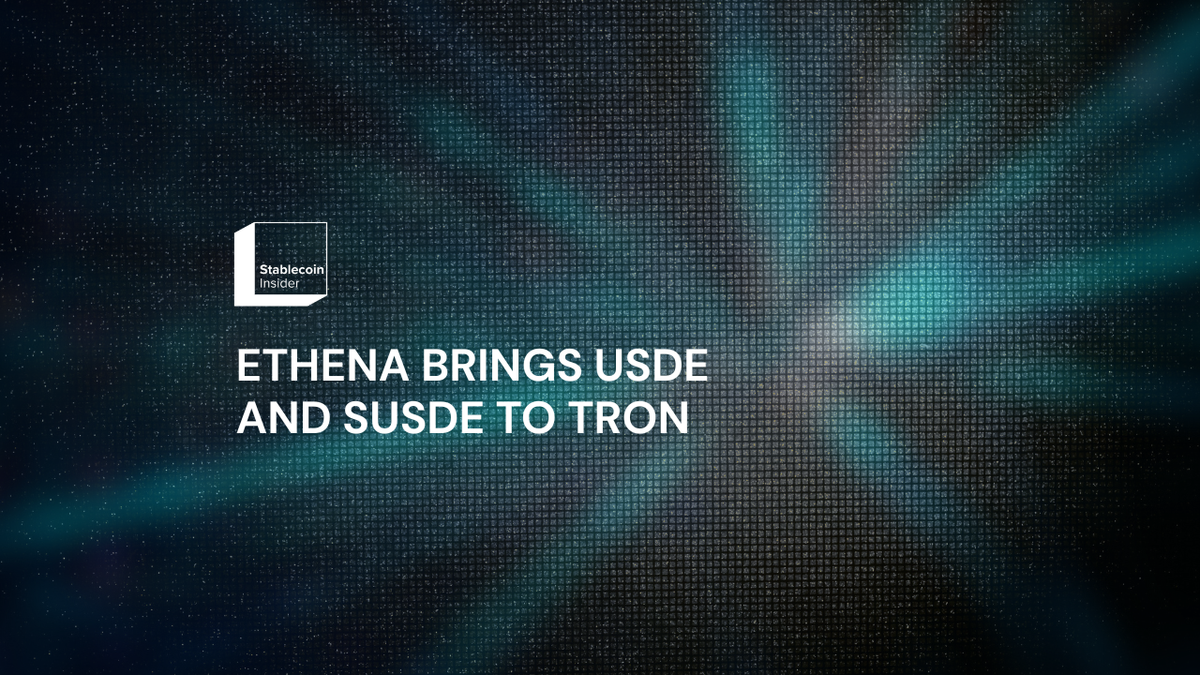
2. Ethena’s USDe Launches on TRON Network
Just days ago (September 11, 2026), Ethena Labs and TRON DAO announced that USDe and sUSDe are now live on the TRON network. This expansion leverages Stargate Finance for bridging and targets the massive USDT liquidity pool on TRON (over $94 billion). Integration with JustLend DAO and SUN.io is expected in the coming weeks.
3. GENIUS Act Implementation Clarifies Rules for USDT and USDC
Recent analyses of the GENIUS Act highlight its profound impact on US users. The act mandates 1:1 reserve backing in cash or short-term Treasuries, requires monthly audits by registered accounting firms, and bans interest payments on stablecoins. While Circle has restructured reserves to comply, Tether has explicitly stated it will not seek US federal licensing, creating a bifurcated regulatory environment for the top two stablecoins.
Regulatory & Compliance Tracker
- United States (GENIUS Act): The framework is now actively shaping issuer behavior. Major issuers like Circle (USDC) and Paxos (PYUSD) have obtained or are seeking OCC non-objection letters. The law imposes criminal penalties for executives who fail to maintain proper reserves or publish audited reports. Tether's decision to remain outside the US federal licensing regime highlights the ongoing jurisdictional arbitrage in the sector.
- European Union (MiCA): MiCA remains the comprehensive single-market framework. Unlike the fragmented US approach, MiCA requires a single authorization for cross-border operations within the EU. Tether has not sought MiCA authorization, limiting its official compliance status in the region compared to fully licensed competitors.
On-Chain & DeFi Pulse
- Market Concentration: On-chain data confirms extreme centralization, with USDT and USDC combined supply reaching approximately $257.7 billion out of a total market cap near $302.9 billion. This concentration poses systemic risks but also provides deep liquidity for DeFi protocols.
- Yield & Strategy Shifts: With the GENIUS Act banning interest payments on stablecoins themselves, yield generation is increasingly moving off-chain or into separate DeFi protocols. Ethena's pivot to RWAs reflects a broader industry trend where stablecoin issuers are seeking non-crypto-native collateral sources to stabilize their pegs and appeal to traditional finance institutions.
Analysis: What It Means
The stablecoin market is entering a phase of "regulatory bifurcation." The dominance of the USDT/USDC duopoly (85% share) suggests that network effects and liquidity depth currently outweigh regulatory compliance costs for many users. However, the GENIUS Act is forcing a clear separation between "regulated dollars" (like USDC and PYUSD) and "offshore dollars" (like USDT). For institutional players, this distinction is becoming critical for balance sheet compliance.
Ethena's recent moves illustrate the fragility of algorithmic/hybrid models during market stress. By pivoting to real-world assets, Ethena is attempting to compete with fiat-backed stablecoins not just on yield, but on structural stability. Its expansion onto TRON is a tactical play to capture liquidity in emerging markets where TRON remains dominant. If successful, this could challenge the USDT monopoly on specific chains, but it requires significant operational execution to manage RWA custody and redemption.
What to Watch Next
- Monthly Reserve Audits: Watch for the first round of monthly reserve reports mandated by the GENIUS Act for compliant issuers like Circle and Paxos. Discrepancies could trigger enforcement actions.
- Tether’s Regulatory Response: Monitor any shifts in Tether’s stance on US licensing or potential legal challenges regarding the GENIUS Act's extraterritorial reach.
- TRON Integration Milestones: Track the integration of USDe with JustLend DAO and SUN.io, which will test the demand for yield-bearing stablecoins on the TRON network.
- MiCA Enforcement Updates: Look for updates on EU enforcement actions against non-compliant issuers operating in the European Economic Area without MiCA authorization.
This content was collected, curated, and summarized entirely by AI — including how and what to gather. It may contain inaccuracies. Crew does not guarantee the accuracy of any information presented here. Always verify facts on your own before acting on them. Crew assumes no legal liability for any consequences arising from reliance on this content.
Powered by
