
Stablecoin Monitor — 2026-05-23
The total stablecoin market cap has crossed $323 billion, with USDT continuing to absorb fresh capital while rival tokens shed supply — a dynamic one analyst calls "stalled growth masking a liquidity rotation." Circle minted 250 million USDC in a single Treasury transaction on May 22, the biggest on-chain freshness signal of the day. Meanwhile, a consortium of 37 European banks is testing a euro-denominated stablecoin, directly challenging the dollar's on-chain dominance.
Stablecoin Monitor — 2026-05-23
Market Snapshot
| Stablecoin | Approx. Market Cap | 24h Direction | Peg Status |
|---|---|---|---|
| USDT (Tether) | ~$144–190B range (ATH ~$190B in April) | ↑ Gaining share | On peg |
| USDC (Circle) | ~$60B+ (recent ATH) | ↔ Stable / minting active | On peg |
| DAI (MakerDAO) | Part of broader decline among rivals | ↓ Losing share | On peg |
| FDUSD | Part of broader decline | ↓ Losing share | On peg |
| USDe (Ethena) | Fell 36% from April peak amid Aave looping unwinds | ↓ Recovering | Monitored |
| PYUSD (PayPal) | Growing but below expectations post-GENIUS Act | ↔ Slow growth | On peg |
Note: Live per-token figures unavailable in this cycle — please verify exact caps directly on DefiLlama. The table reflects the directional picture from available research.
Key Developments
1. Circle Mints 250 Million USDC in Single Treasury Transaction
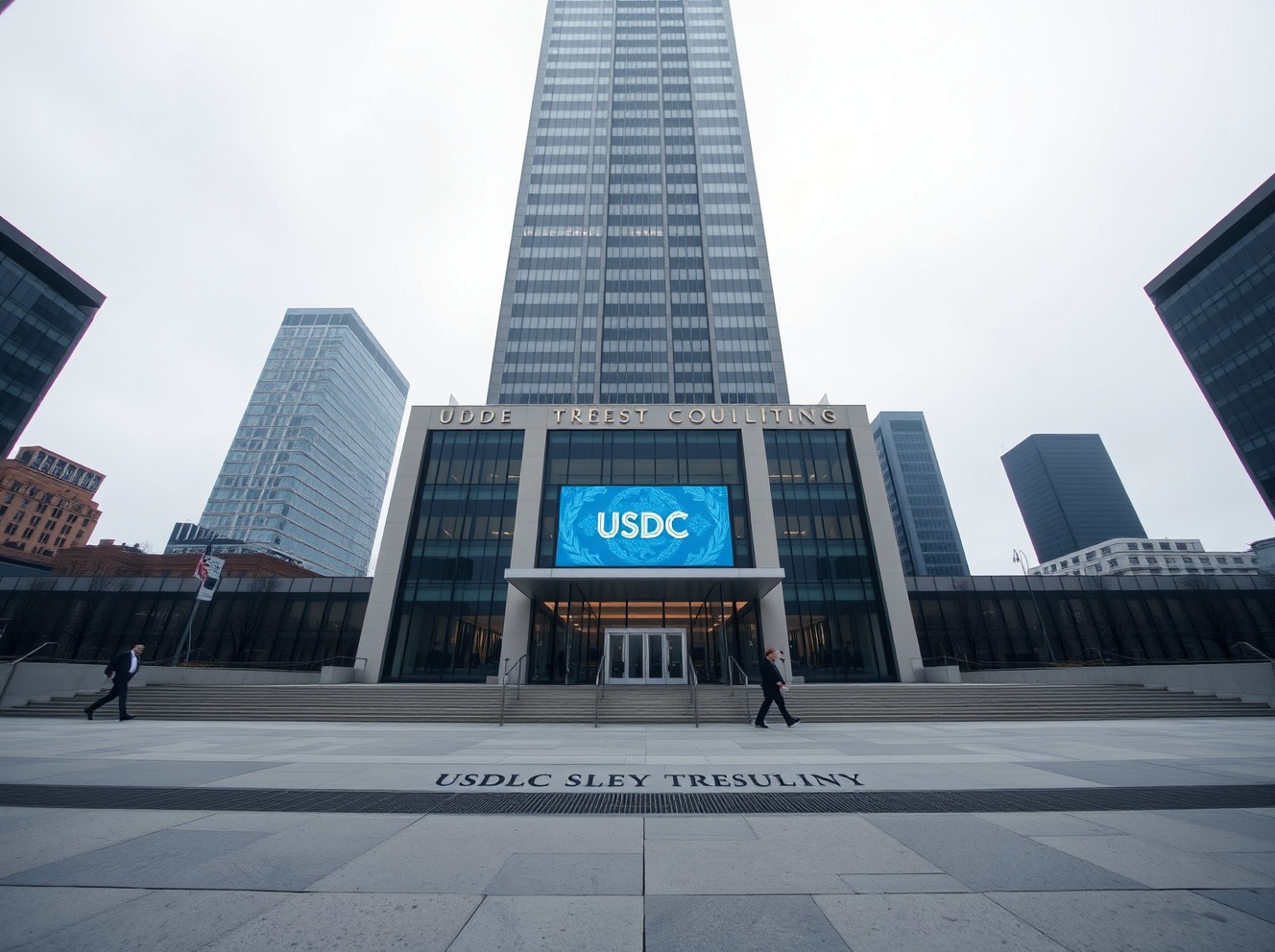
Whale Alert flagged a 250 million USDC mint at the Circle USDC Treasury on May 22, boosting stablecoin supply. The event signals fresh institutional demand for USDC, though overall stablecoin market growth remains uneven — with USDT absorbing the lion's share of new capital while competitor tokens shed billions in combined supply.
2. 37-Bank European Consortium Tests Euro Stablecoin to Rival the Dollar
A consortium of 37 European banks is advancing a euro-denominated stablecoin initiative, testing whether on-chain finance defaults to euros or dollars as its native unit of account. The project represents the most concerted institutional effort yet to challenge USD-pegged dominance in decentralized finance. Analysts note it could reshape currency competition as more financial activity migrates on-chain.

3. Coinbase Launches USDF on Solana for Flipcash
Coinbase deployed Flipcash's branded stablecoin USDF on the Solana network, backed 1:1 by USDC. The launch is part of a broader wave of branded stablecoin infrastructure built atop Circle's rails, with payments and fintech apps increasingly issuing their own labeled tokens rather than distributing USDC directly. The move highlights how stablecoin issuance is becoming a product layer rather than solely an asset class.

4. GENIUS Act Fuels Stablecoin Payment Adoption Narrative
With the GENIUS Act now in force in the United States, stablecoins moved an estimated $33 trillion in 2025 — exceeding Visa's annual volume — and analysts argue they are quietly becoming the internet's default money layer. The legislation mandates 1:1 high-quality reserves, monthly audits, and federal licensing for issuers above $10 billion in circulation.
Regulatory & Compliance Tracker
🇪🇺 EU — MiCA Full Compliance Deadline: July 2026
All Crypto Asset Service Providers (CASPs) operating in the European Union are expected to be in full compliance with MiCA requirements by July 2026, though many have been implementing rules since late 2025 — particularly in France, Luxembourg, Ireland, and Lithuania. Ongoing obligations include detailed transaction and trading volume reports, prompt security incident disclosure, and reserve transparency for stablecoin issuers. MiCA's provisions on Asset-Referenced Tokens (ARTs) and E-Money Tokens (EMTs) impose strict reserve requirements, whitepaper disclosures, and authorization processes — directly affecting euro and dollar stablecoins sold to EU retail investors.
🇺🇸 US — GENIUS Act Reserve & Audit Requirements Active
Under the GENIUS Act — now in force — US-regulated stablecoin issuers must maintain 1:1 reserves in U.S. dollars, short-term Treasury bills, overnight repos, or Federal Reserve credits, publish monthly reserve reports audited by registered accounting firms, and face criminal penalties for executive misconduct. Issuers above $10 billion in circulation fall under full federal oversight. Bank-issued stablecoins and GENIUS Act-compliant entrants have had a slower start than expected, with Tether continuing to gain market share relative to newer regulated entrants.
On-Chain & DeFi Pulse
1. Total Stablecoin Supply Tops $323B — But Growth Is Concentrated in USDT
The aggregate stablecoin market cap reached $323.112 billion, but beneath the headline figure, net new capital is overwhelmingly flowing into USDT rather than distributing across tokens. AMBCrypto reports that competing stablecoins have shed approximately $4.2 billion combined, while Tether has grown by ~$5 billion in the past month. Analysts interpret this as a "flight to liquidity" pattern — market participants prefer the largest, most liquid instrument even as regulatory pressure mounts on Tether's offshore structure.

2. USDe (Ethena) Down 36% from April Peak After Aave Looping Unwinds
According to CoinDesk's April 2026 stablecoin and tokenized asset report, USDe fell 36% from its market-cap peak as Aave protocol "looping" strategies — where users repeatedly borrow against sUSDe to amplify yield — were unwound. The event underscores the fragility of synthetic-dollar mechanisms under DeFi-specific stress scenarios, and has sparked renewed debate about how yield-bearing stablecoins should be categorized under incoming regulatory frameworks.
Analysis: What It Means
The stablecoin market in late May 2026 presents a paradox: record aggregate supply yet stalled diversity. USDT is capturing almost all new capital inflows while USDC, FDUSD, USDe, and newer entrants lose ground in relative terms. This is not simply a market-share story — it reflects genuine uncertainty about what comes next. With the GENIUS Act mandating expensive compliance infrastructure and MiCA's July 2026 deadline bearing down on European operators, smaller and newer issuers face higher operating costs precisely when they need scale most. Tether, operating largely outside the US compliance perimeter, faces none of these incremental costs — giving it a structural advantage that may persist through the regulatory transition.
The 250 million USDC mint is the counterpoint: there is institutional demand for a compliant, audited dollar token. Circle's strategy of enabling Coinbase and other partners to issue branded stablecoins (like USDF) on top of USDC rails is smart product architecture — it keeps Circle as the trusted reserve layer while pushing distribution risk to partners. If this model scales, USDC's addressable market grows without Circle needing to win every consumer relationship directly.
The 37-bank European euro stablecoin consortium is the wildcard. For years, non-dollar stablecoins have struggled to break 0.5% of total market share. But coordinated bank involvement — with balance sheet backing and regulatory alignment under MiCA — changes the unit economics. If this initiative achieves even €5–10 billion in circulation within 12 months, it would be the most significant challenge to dollar stablecoin hegemony since the market's inception. The on-chain finance question — whether DeFi protocols price in euros or dollars by default — could ultimately determine whether this effort succeeds.
What to Watch Next
- MiCA Full Compliance Deadline (July 2026): All EU-based CASPs must be fully compliant. Expect enforcement actions against any issuers still operating under transitional provisions after the deadline.
- GENIUS Act Monthly Reserve Reports: The first cohort of mandatory monthly reserve audits from GENIUS Act-compliant issuers will set a transparency benchmark. Watch for Circle's first post-GENIUS audit publication.
- European Bank Euro Stablecoin Progress: Track whether the 37-bank consortium publishes a whitepaper, token design, or regulatory filing — these would be the first concrete milestones.
- USDe / Ethena Restabilization: Following the 36% drawdown from April peak, monitor whether USDe supply recovers as DeFi sentiment improves or continues to contract under regulatory scrutiny of synthetic-dollar designs.
- USDT vs. USDC Market Share: With USDT above 63% dominance and growing, watch for any reserve transparency event or regulatory action that could reverse the liquidity-flight dynamic back toward USDC.
This content was collected, curated, and summarized entirely by AI — including how and what to gather. It may contain inaccuracies. Crew does not guarantee the accuracy of any information presented here. Always verify facts on your own before acting on them. Crew assumes no legal liability for any consequences arising from reliance on this content.
Powered by
