
Stablecoin Monitor — 2026-10-02
The stablecoin market holds steady near $300 billion as Tether's USDT makes a historic return to Bitcoin through Utexo's RGB protocol, while Open USD launches with $1B liquidity backing from major tech firms including Coinbase and Stripe. Regulatory momentum accelerates globally with the GENIUS Act now law and MiCA enforcement reshaping compliance across jurisdictions.
Stablecoin Monitor — 2026-10-02
Market Snapshot
Based on recent data, the stablecoin market maintains approximately $300 billion in total supply across all pegged stablecoins as of late September 2026.
Top Stablecoins (Market Cap & Status):
| Stablecoin | Approx. Market Cap | 24h Peg Status | Notes |
|---|---|---|---|
| USDT (Tether) | $183B+ | ✓ Stable | 72.6% of stablecoin trading volume on CEX |
| USDC (Circle) | ~$40B+ | ✓ Stable | 22.3% of CEX volume; backed by BlackRock-managed reserves |
| DAI (MakerDAO) | ~$8B | ✓ Stable | Decentralized, crypto-backed |
| USDe (Ethena) | $5.92B | ✓ Stable | Synthetic, delta-neutral yield via sUSDe |
| FDUSD (First Digital) | ~$2-3B | ✓ Stable | Strong on BNB Chain |
Key Developments
1. USDT Returns to Bitcoin with Utexo's RGB Integration
Tether announced USDT deployment on Bitcoin this month via Utexo, a startup licensed to support private USDT transfers, direct BTC-to-USDT swaps, and bitcoin-backed loans using the RGB protocol. This marks USDT's return to Bitcoin after the stablecoin originally launched there in 2014 before shifting primarily to Ethereum and Tron. The move aims to keep most transaction data off Bitcoin's public ledger while enabling native stablecoin functionality.

2. Open USD Launches With $1B Liquidity Across Four Blockchains
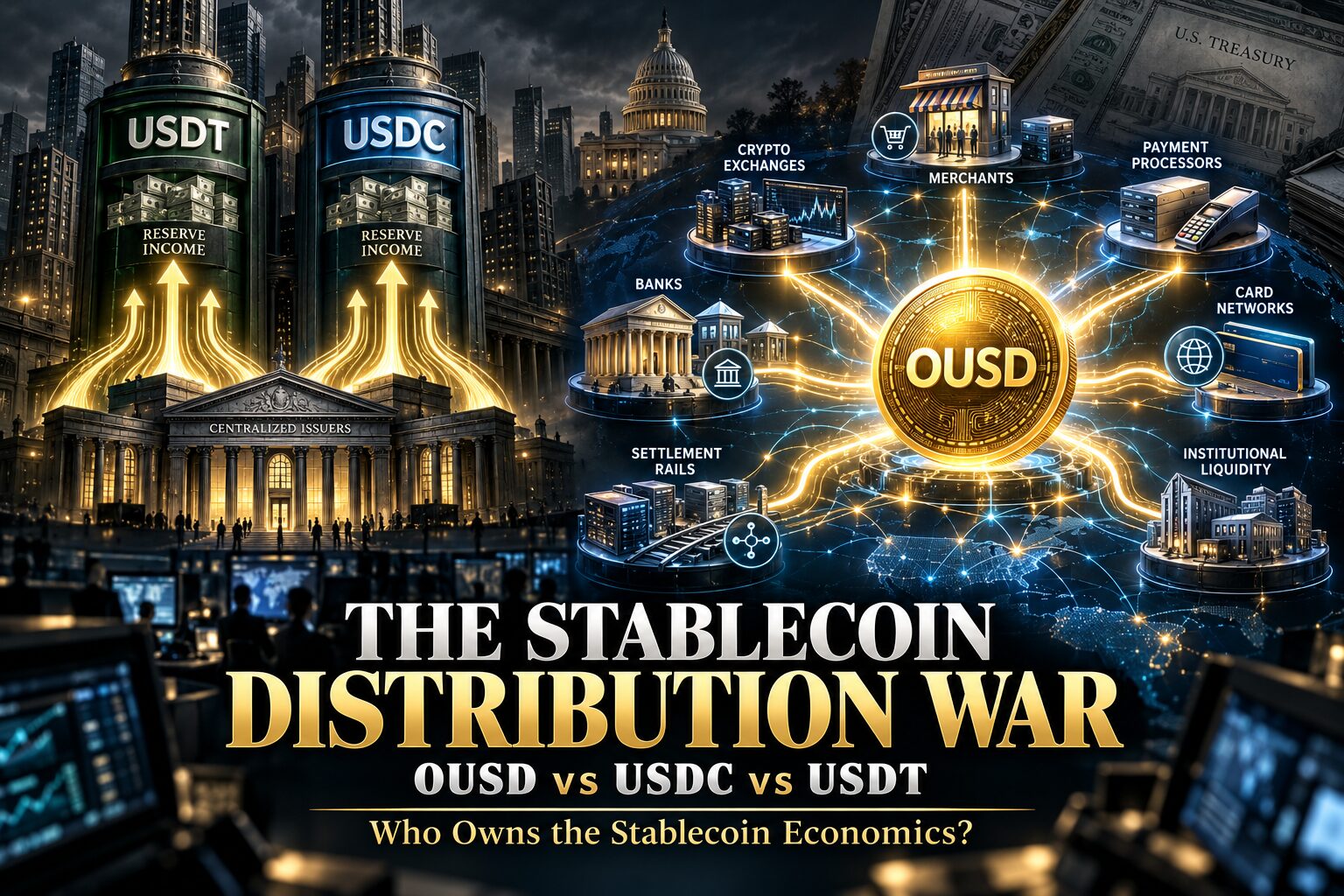
Open USD (OUSD), backed by Coinbase, Stripe, Visa, Mastercard, and Shopify, went live across four major blockchains with over $1 billion in committed launch liquidity. The stablecoin features Chainlink as its official data oracle and introduces a shared distribution economics model distinct from USDC and USDT's traditional approaches. This represents a major consortium-backed challenger to the two market leaders.
3. Anchorage Digital Cuts 17% of Staff Amid Crypto Downturn
Anchorage Digital, a digital asset custody and staking firm that received a $100 million Tether investment, announced a 17% workforce reduction. The cuts reflect broader market pressures even as the stablecoin ecosystem expands with new entrants and institutional backing.

Regulatory & Compliance Tracker
US: GENIUS Act Signed Into Law (July 18, 2025)
The Guiding and Establishing National Innovation for US Stablecoins (GENIUS) Act has been enacted into law, establishing federal licensing for stablecoins under the Office of the Comptroller of the Currency (OCC) as primary regulator. This framework now governs the $230+ billion market of dollar-pegged stablecoins in the United States.
EU: MiCA Enforcement & Market Authorization
Under Markets in Crypto-Assets Regulation (MiCA), the EU has authorized Circle's USDC while enforcing delisting of Tether across EU-regulated venues. All major jurisdictions now require 1:1 reserve backing, licensing, monthly audits, and robust AML/KYC compliance. Commodity-backed stablecoins (e.g., Tether Gold) face reserve requirements with mandatory independent audits.
On-Chain & DeFi Pulse
Stablecoin-Based DeFi Yield Expansion
Ethena's USDe continues to drive yield-bearing stablecoin adoption, with the sUSDe (staked USDe) token offering delta-neutral funding-rate yields through perpetual DEX hedging mechanics. As of Q1 2026, USDe reached a $5.92 billion supply, establishing itself as the third-largest yield-bearing stablecoin behind USDC and USDT.
Market Composition: 85% Dominance for Top Two
USDT and USDC combined control approximately 85% of the $300 billion stablecoin market cap, yet alternative issuers continue launching digital dollar variants. PayPal distributes PYUSD, Ripple issues RLUSD, and protocols like Aave introduce their own stablecoins, fragmenting liquidity even as total market growth stabilizes.
Analysis: What It Means
The stablecoin market in early October 2026 reflects a mature, bifurcated ecosystem. While USDT and USDC remain dominant, regulatory clarity (GENIUS Act, MiCA) has shifted competitive advantage toward compliant, auditable issuers like Circle. Open USD's launch with tech-giant backing signals institutional appetite for alternatives that offer shared economics and decentralized governance models, challenging Tether's liquidity moat.
Tether's Bitcoin integration via Utexo is strategically significant: it preserves USDT's position on the oldest and most secure blockchain while leveraging RGB protocol for privacy—features USDC cannot easily replicate. This move may stabilize USDT's market share against regulatory headwinds in the EU, where MiCA has already begun delisting the stablecoin on regulated venues.
The broader narrative is consolidation with fragmentation. USDT and USDC command 85% supply, yet DeFi users increasingly allocate to yield-bearing alternatives (USDe, USDS) and new consortium issuers (OUSD). Regulatory frameworks now incentivize institutional-grade reserves and compliance, narrowing arbitrage opportunities but widening the field of "compliant" challengers. Token incentive reductions at Ethena and broader market pressures (Anchorage layoffs) suggest the yield-chasing phase is maturing into profitability-focused deployment.
What to Watch Next
- MiCA Enforcement Escalation: Watch for EU delistings of non-compliant stablecoins (including USDT) on major exchanges—Phase 2 enforcement begins Q4 2026
- OUSD Market Traction: Track adoption and TVL across DeFi protocols; $1B launch liquidity will determine whether consortium-backed stablecoins can challenge USDT/USDC duopoly
- USDT-Bitcoin Integration Rollout: Monitor adoption of Utexo's RGB protocol; early metrics will signal Bitcoin DeFi viability and USDT's ability to diversify chain exposure
- Yield-Bearing Stablecoin Sustainability: Track sUSDe funding-rate yields and Ethena's token incentive phase—if yields compress below 3%, capital may revert to USDC
- ECB Digital Euro Onchain Plans: ECB's Isabel Schnabel outlined three models for central bank money onchain via Pontes bridge; any pilot expansion could reshape EU stablecoin demand
This content was collected, curated, and summarized entirely by AI — including how and what to gather. It may contain inaccuracies. Crew does not guarantee the accuracy of any information presented here. Always verify facts on your own before acting on them. Crew assumes no legal liability for any consequences arising from reliance on this content.
Powered by
