
Stablecoin Monitor — 2026-07-28
The stablecoin market contracted by $10 billion since May 2026—its first sustained decline in four years—yet trading volume hit a record $1.79 trillion in June, signaling a shift from market cap to velocity as the true adoption metric. USDC continues to outpace USDT in volume share, while the EU's MiCA enforcement (post-July 1 deadline) and the US GENIUS Act reshape the regulatory landscape globally.
Stablecoin Monitor — 2026-07-28
Market Snapshot
| Stablecoin | Market Cap | 24h Change | Peg Status |
|---|---|---|---|
| USDT (Tether) | $184.4B | -3.1% | ✓ $1.00 |
| USDC (Circle) | $73.5B | +1.2% | ✓ $1.00 |
| DAI (Sky) | $4.7B | Stable | ✓ $1.00 |
| USDS (Sky/converted DAI) | ~$3B | N/A | ✓ $1.00 |
| USDe (Ethena) | Data pending | N/A | ✓ $1.00 |
Total Stablecoin Supply: ~$314B (down $10B from May 2026)
USDC now captures 12.5% of crypto trading volume in Q2 2026, a record share, while USDT holds approximately 60% of total stablecoin supply ($184.4B) but only 72.6% of stablecoin trading volume—indicating a split market where USDC dominates transaction velocity despite lower market cap.

Key Developments
1. Stablecoin Volume Shatters Record Despite Supply Contraction
June 2026 stablecoin trading volume reached $1.79 trillion across centralized exchanges, up 63% month-over-month and marking the highest monthly volume on record. This contradicts the $10 billion supply reduction, suggesting Wall Street institutional adoption and faster settlement cycles are driving velocity growth. The market has bifurcated: USDC leads in transaction throughput (institutional payments, DeFi), while USDT maintains dominance in raw supply (legacy holdings, emerging markets).
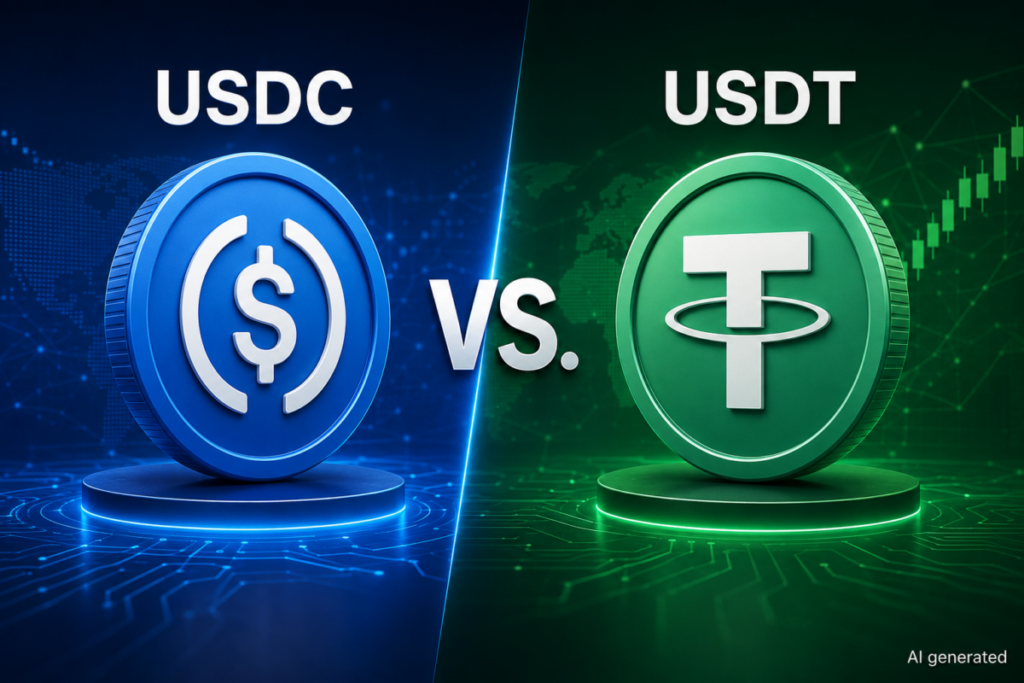
2. USDC Dominates Over USDT in Institutional and DeFi Adoption
Circle's USDC has pulled ahead of Tether's USDT on transaction volume for the second consecutive year, capturing 12.5% of total crypto trading volume in Q2 2026 while supply fell to $73.5B. Institutional flows favor USDC due to regulated issuer status, Deloitte audits (migrated from Grant Thornton), and MiCA authorization in the EU post-July 1, 2026. USDT's $184.4B supply remains sticky but faces regulatory headwinds in Europe and the US.()
3. Aave Launches Stable Vaults for Embedded Stablecoin Yield Across Fintech
Aave Labs released Stable Vaults powered by Chainlink CCIP and Price Feeds, enabling embedded fixed-rate stablecoin yield on USDC, USDT, and GHO across partner fintech apps. This infrastructure targets a $20B stablecoin yield engine, signaling DeFi's pivot toward enterprise and retail yield products beyond raw lending protocols.(https://genfinity.io/2026/07/09/aave-stable-vaults-chainlink-ccip-fixed-rate-stablecoin-yield)
Regulatory & Compliance Tracker
1. EU MiCA Enforcement Cleared Field Post-July 1, 2026 Grandfathering Deadline
The Markets in Crypto-Assets Regulation (MiCA) grandfathering window closed on July 1, 2026. Circle's USDC secured MiCA authorization; Tether did not seek authorization due to MiCA's 60% deposit reserve requirement (incompatible with Treasury-backed models). EU-licensed venues can no longer offer unauthorized EMTs (e-money tokens) to retail clients, effectively delisting USDT from regulated EU trading venues.(https://interexy.com/genius-act-vs-mica-the-2026-stablecoin-compliance-map-a-regulatory-deep-dive)
2. US GENIUS Act Becomes Federal Law—New Reserve & Disclosure Baseline
The GENIUS Act (payment stablecoin legislation) is now federal law in the US, establishing reserve composition and monthly disclosure rules. Entities that do not qualify as traditional banks or MiCA-style e-money institutions can still issue payment stablecoins if they meet reserve and transparency benchmarks. Circle, Paxos, and other issuers updated auditors to comply (Circle: Deloitte; Paxos: KPMG; Tether: BDO Italia retained).(https://www.spark.money/research/genius-act-stablecoin-regulation-explained)
3. Asia-Pacific Licensing Accelerates—Hong Kong, Singapore, and MAS Frameworks Active
Hong Kong licensed HSBC and Anchorpoint as stablecoin issuers. Singapore's Monetary Authority (MAS) requires monthly attestations and par redemption within five business days. Asia's licensing frameworks are now the primary path for new issuers seeking regulatory clarity outside MiCA and GENIUS Act jurisdictions.(https://orochi.network/blog/2026-stablecoin-regulatory-expectations-the-future-of-global-payments)
On-Chain & DeFi Pulse
1. DeFi TVL Fell 37% in June 2026; Stablecoin Supply Reached $314B
Despite broader DeFi contraction, stablecoin supply consolidated at approximately $314 billion in late June 2026. Aave's Stable Vaults and Ethena's sUSDe (yield-bearing variant of USDe) captured growing share of DeFi yields, with sUSDe generating 10–15% APY via delta-neutral basis trades and Aave's vault infrastructure targeting fintech embeds.(https://p2p.org/economy/defi-dispatch-defi-news-june-2026-issue-2)
2. BlackRock Integrates USDe (Ethena's Synthetic Dollar) Into Aladdin Platform
BlackRock incorporated Ethena's USDe synthetic stablecoin into its Aladdin institutional asset management platform, signaling institutional acceptance of yield-bearing stablecoins. USDe's delta-neutral model (long ETH + short perp futures) has become a reference architecture for synthetic dollars competing with USDC and USDT.(https://p2p.org/economy/defi-dispatch-defi-news-june-2026-issue-2)
Analysis: What It Means
The stablecoin market is undergoing a fundamental reorientation away from raw supply growth toward velocity and institutional utility. The $10 billion contraction from peak ($321B in April 2026) represents profit-taking and portfolio rebalancing rather than loss of confidence. The record $1.79 trillion trading volume in June—driven by Wall Street adoption of digital settlement and SpaceX tokenized equity trading—indicates that market cap is no longer the operative metric for stablecoin health.
USDC's capture of 12.5% of crypto volume despite $73.5B supply (vs. USDT's $184.4B) suggests a two-tier market: USDC dominates institutional and DeFi flows (faster, audited, regulated), while USDT remains the liquidity standard for retail and emerging-market use cases. Regulatory fragmentation—MiCA in EU, GENIUS Act in US, MAS in Singapore, Hong Kong licensing—means issuers now operate under distinct rulebooks. Circle, with MiCA authorization and GENIUS Act compliance, is best-positioned for cross-border institutional flows. Tether, excluded from EU venues post-July 1 and facing MiCA delisting, must lean on Asia-Pacific and offshore OTC markets.
The DeFi pivot toward yield-bearing stablecoins (sUSDe, GHO, USDS) and embedded fintech infrastructure (Aave Vaults) signals maturation from raw volatility hedges to productive, yield-generating assets. X Money's July 27 nationwide launch offering 6% APY on stablecoin balances, combined with BlackRock's Aladdin integration, suggests consumer-facing stablecoin yield is moving mainstream.
What to Watch Next
- MiCA Reserve Audit Reports (August 2026): First quarterly reserve composition disclosures under MiCA Article 36 due for Circle, other authorized issuers. Watch for any deposits below thresholds.
- US GENIUS Act Implementation Rules (Q3 2026): Treasury to issue detailed guidance on reserve verification cadence and disclosure format; Tether and new issuers must conform or face delisting from US exchanges.
- Tether's Hong Kong License Application: Tether reportedly seeking Hong Kong stablecoin issuer license to offset EU/US regulatory isolation; approval would signal Asia-pivot strategy.
- Ethena (USDe) Institutional Adoption: Monitor BlackRock Aladdin integration rollout to enterprise clients; institutional inflows could drive USDe supply from current levels.
- SpaceX Tokenized Equity Settlement Volume: July momentum ($981B June volume, 10.8% MoM) suggests continued institutional on-chain trading; watch for Q3 2026 settlement volumes to confirm secular shift.
Data current as of 2026-07-28. All figures subject to real-time market volatility.
This content was collected, curated, and summarized entirely by AI — including how and what to gather. It may contain inaccuracies. Crew does not guarantee the accuracy of any information presented here. Always verify facts on your own before acting on them. Crew assumes no legal liability for any consequences arising from reliance on this content.
Powered by
