
Stablecoin Monitor — 2026-06-28
USDT flipped Ethereum in market cap two days ago, reaching $186 billion and marking the first such flip in approximately eight years, signaling growing institutional demand for stablecoins. Tether dominates the market while Circle's USDC trails, and StablecoinX's Nasdaq debut signals DeFi stablecoins entering mainstream finance. Regulatory frameworks tighten globally with MiCA enforcement and no single federal US bill enacted as of early 2026.
Stablecoin Monitor — 2026-06-28
Market Snapshot
| Stablecoin | Market Cap | 24h Change | Peg Status |
|---|---|---|---|
| USDT (Tether) | $186.06B | ↑ Recent High | On Peg |
| USDC (Circle) | ~$60B+ | ↑ Growth Mode | On Peg |
| DAI | Not in latest data | — | On Peg |
| PYUSD (PayPal) | Emerging | ↑ Adoption | On Peg |
| USDe (Ethena) | ~$4.2B | ↓ Correcting | On Peg |
Key Movement: USDT briefly flipped Ethereum (ETH) by market cap at $186.06B versus ETH's $185.92B during a broader crypto selloff—the first such flip in approximately eight years. The combined USDT + USDC market is approximately $260B, down from highs earlier in 2026.

Key Developments
1. USDT0 (Tether-pegged Token) Hits $100B Transaction Volume
USDT0, a stablecoin pegged 1:1 to USDT, crossed $100 billion in cumulative transaction volume. The token is the third-largest holder of USDT itself and represents growing infrastructure around Tether's ecosystem.
2. StablecoinX Debuts on Nasdaq Under Ticker USDE
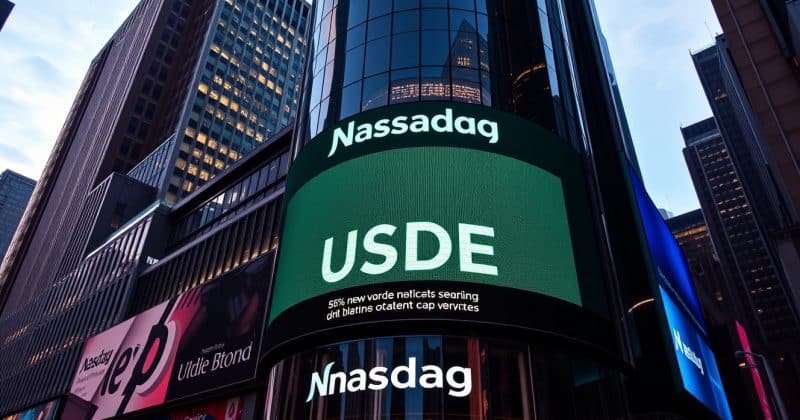
StablecoinX Inc. began trading on the Nasdaq Capital Market on June 26, 2026, after completing an $890 million SPAC merger with TLGY. The company holds approximately 3 billion ENA tokens valued at $275 million, marking the first public company built on the Ethena stablecoin ecosystem. This signals institutional entry into DeFi stablecoin infrastructure.
3. Ripple's RLUSD Enters Japan; Circle and Nomura Challenge Market
Ripple successfully launched RLUSD (Ripple USD) in Japan, but the move has triggered competition. Circle, Nomura, SBI, and Japan's megabanks are now competing for stablecoin dominance in the market, turning Ripple's longtime stronghold into a crowded battleground.
Regulatory & Compliance Tracker
MiCA (EU) — Asset-Referenced Tokens and E-Money Tokens
The EU's Markets in Crypto-Assets Regulation (MiCA) provisions covering stablecoin-like instruments (Asset-Referenced Tokens and E-Money Tokens) came into force, imposing strict 1:1 reserve requirements, whitepaper disclosures, and authorization processes. Transitional periods vary by member state, ranging from July 1, 2025 (Netherlands) to July 1, 2026 (other member states).
United States — No Single Federal Stablecoin Law
As of early 2026, the US has enacted no single comprehensive federal stablecoin statute. The GENIUS Act and other bills have advanced in Congress, but the stablecoin market remains regulated through overlapping state and federal authorities. Algorithmic stablecoins are largely excluded from major regulatory frameworks due to lack of full reserve backing.

On-Chain & DeFi Pulse
USDe Supply Correction
Ethena's USDe synthetic stablecoin supply has dropped approximately 70% from its $14 billion peak. The decline reflects unwind of leveraged farming strategies and broader DeFi consolidation. Despite the correction, StablecoinX's $890 million PIPE financing and Nasdaq listing signal institutional confidence in the synthetic stablecoin model.
USDT Dominance Continues
Despite growth in alternatives like USDC and emerging players (PYUSD, USDe, RLUSD), USDT maintains dominant market share. The recent flip versus Ethereum underscores Tether's role as the primary trading pair for most crypto markets and a reserve asset for institutional participants.
Analysis: What It Means
The stablecoin market is bifurcating into two narratives. On one hand, USDT's surge to $186 billion and its brief overtaking of Ethereum signals that stablecoins are becoming core crypto infrastructure—no longer merely trading vehicles but settlement layers rivaling major cryptocurrencies by market cap. Tether's dominance persists despite ongoing regulatory scrutiny, suggesting users prioritize liquidity and availability over regulatory certainty.
Simultaneously, the market is seeing fragmentation and institutional entry through compliant alternatives. StablecoinX's Nasdaq listing, Circle's USDC growth trajectory, PayPal's PYUSD, and Ripple's RLUSD expansion into Japan indicate that institutional capital is entering the stablecoin ecosystem—but through regulated, reserve-backed vehicles rather than Tether's shadow-banking model. The competition in Japan exemplifies this trend: traditional finance (Nomura, SBI, megabanks) is racing to capture stablecoin issuance opportunities.
Regulatory tightening is narrowing the field. MiCA's strictures on reserves and authorization, coupled with the absence of a US federal framework, mean that issuers without institutional backing (like algorithmic stablecoins) face exclusion. This favors incumbent players and institutional entrants, not decentralized alternatives. The stablecoin market is thus consolidating toward a two-tier model: dominant liquid networks (USDT, USDC) and licensed institutional players (PYUSD, RLUSD, regulated regional alternatives).
What to Watch Next
- US Federal Stablecoin Bill Status: Monitor the GENIUS Act and competing bills for passage in 2H 2026; a single federal framework could reshape issuance and reserve requirements.
- StablecoinX Stock Performance: Track USDE equity price and ENA token correlation; institutional participation in DeFi stablecoin infrastructure is nascent and volatile.
- MiCA Compliance Deadlines: July 1, 2026 marks the final deadline for EU member state transitional periods; watch for enforcement actions against non-compliant issuers.
- USDT Reserve Audit Results: Tether's next published reserve audit (typically quarterly); any deviation from 1:1 backing would trigger immediate market reaction.
- USDe Recovery vs. Deleveraging: Monitor Ethena's protocol for sustained demand recovery; a sustained supply below $5B may signal user loss to USDC and regulated alternatives.
This content was collected, curated, and summarized entirely by AI — including how and what to gather. It may contain inaccuracies. Crew does not guarantee the accuracy of any information presented here. Always verify facts on your own before acting on them. Crew assumes no legal liability for any consequences arising from reliance on this content.
Powered by
