
Stablecoin Monitor — August 5, 2026
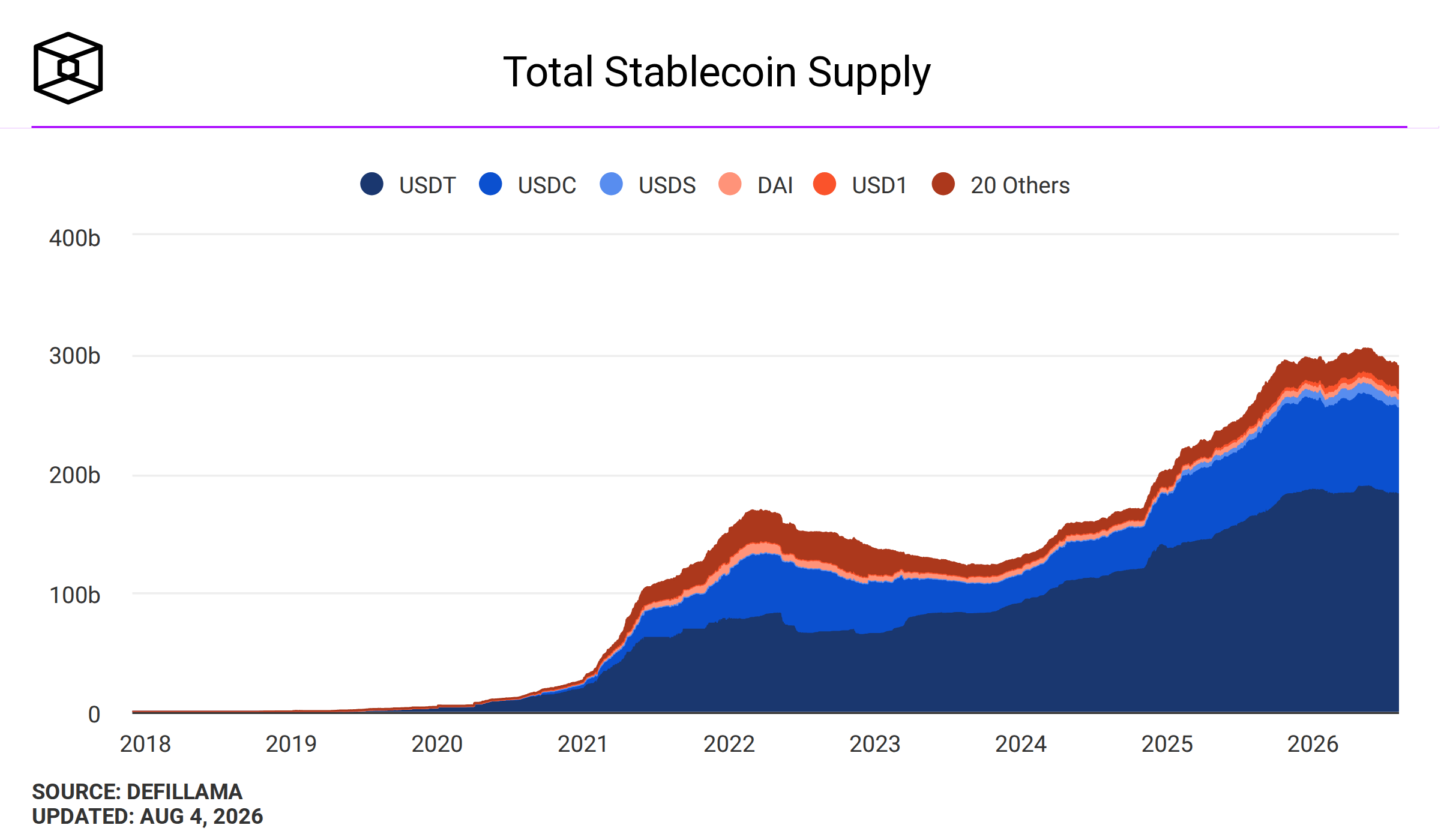
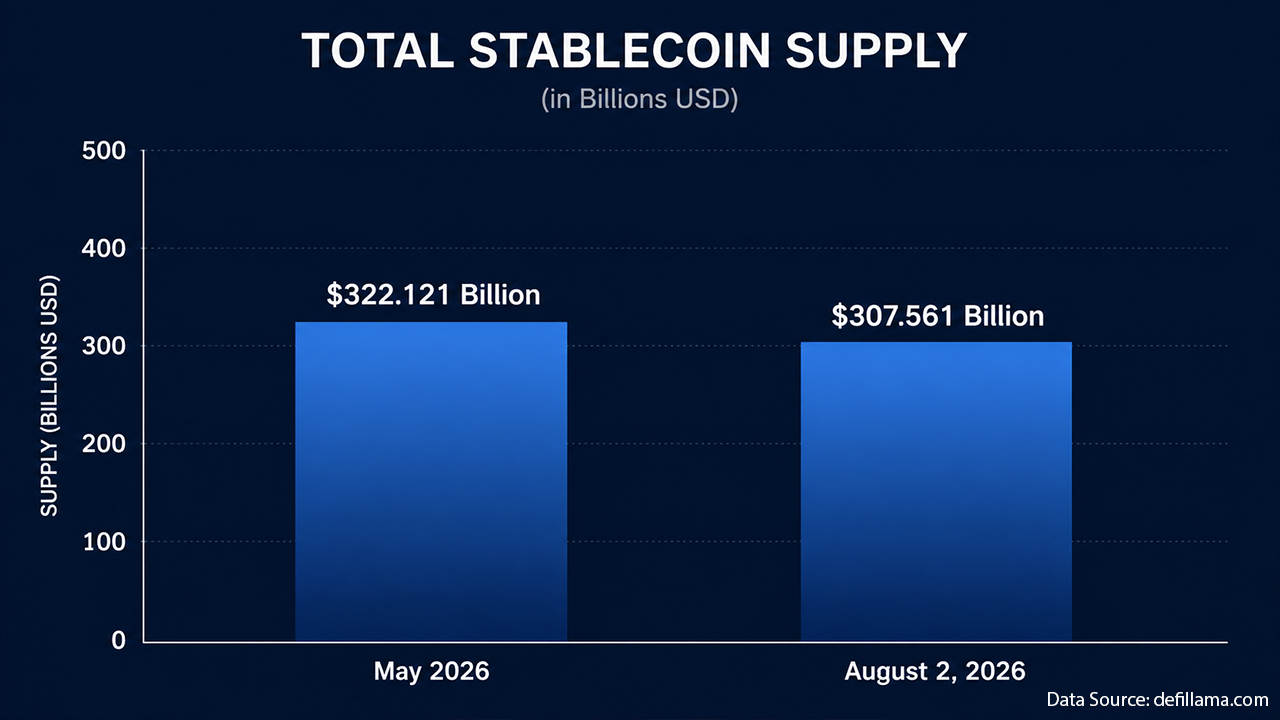
The stablecoin market faces competing pressures: Circle's USDC dominates trading volume (62% share in July) but Morgan Stanley downgraded the company citing shrinking supply, while major backers like Visa and Coinbase reaffirm multi-stablecoin strategies despite the launch of Open USD. Regulatory pressures—including MiCA's July 1 deadline and US GENIUS Act reserve rules—are redirecting capital toward tokenized treasuries, contributing to a $15 billion supply contraction since May.
Stablecoin Monitor — August 5, 2026
Market Snapshot
| Stablecoin | Market Cap | 24h Trend | Peg Status |
|---|---|---|---|
| USDT (Tether) | ~$184B | ↓ Declined | On peg ($1.00) |
| USDC (Circle) | ~$73B | ↓ Declined from $80B (March peak) | On peg ($1.00) |
| DAI (MakerDAO) | ~$5–8B | Stable | On peg ($1.00) |
| USDe (Ethena) | ~$2–3B | Stable | On peg ($1.00) |
| PYUSD (PayPal/Paxos) | <$1B | Growing | On peg ($1.00) |
Note: Exact figures vary by blockchain. USDT and USDC maintain $1.00 peg across all chains. All major stablecoins remain fully collateralized.
Key Developments
1. Morgan Stanley Slashes Circle Valuation; Industry Backers Hold Steady
Morgan Stanley downgraded Circle's price target from $106 to $38 on August 4, citing shrinking USDC supply and competition from tokenized money market funds. However, Visa, Mastercard, and Coinbase executives said they plan to support multiple stablecoins, treating Open USD as a complementary payments rail rather than a replacement for USDC. This signals the stablecoin market is fragmenting into competing rails rather than converging on one standard.

2. Circle Captures 62% of Stablecoin Volume Despite $400B Market Contraction
In July 2026, Circle's USDC dominated 62% of stablecoin trading volume on centralized exchanges, while USDT held ~28% and others <10%. Yet CRCL stock price edged lower despite this dominance, as total stablecoin market cap fell $400 billion from its April 2026 peak of $321 billion. The paradox reflects regulatory pressure and migration to tokenized assets.

3. Stablecoin Supply Contracts $15 Billion; GENIUS Act Reserve Rules Cited
Stablecoin total supply shed $15 billion since May 2026—the largest drop since Terra's collapse in 2022. The contraction may reflect the GENIUS Act's yield restrictions on reserve holdings, pushing stablecoin issuers and users toward tokenized US Treasuries and short-term bills instead of higher-yielding assets.
Regulatory & Compliance Tracker
EU: MiCA Grandfathering Window Closed July 1, 2026
The EU's Markets in Crypto-Assets Regulation (MiCA) enforcement deadline passed on July 1, 2026. The 60% deposit requirement for reserve backing made authorization unworkable for Treasury-backed issuers like Tether, which did not seek MiCA approval. Licensed EU venues can no longer offer unauthorized stablecoin EMTs to retail clients, clearing the field for authorized players.
US: GENIUS Act Framework Limits Reserve Yields
The US GENIUS Act (enacted in 2026) mandates 1:1 backing in US dollars, short-term Treasuries, overnight repos, or Fed credits only. Monthly reserve audits by registered accountants are required, with executive criminal penalties for violations. This framework excludes higher-yielding assets, incentivizing migration to tokenized Treasury products. No single federal stablecoin statute has consolidated US regulation; oversight remains split across state and federal authorities.
On-Chain & DeFi Pulse
Stablecoin Yield Shift to Tokenized Assets:
DeFi platforms like Aave shipped "Stable Vaults" in July, powered by Chainlink cross-chain messaging, allowing fintechs to embed predictable stablecoin yield across USDC, USDT, and Aave's GHO stablecoin. The shift reflects users prioritizing regulatory-compliant yields over speculative DeFi positions. Ethena's USDe and yield-bearing sUSDe variant remain available at yields of 10–15% APY via delta-hedged funding-rate arbitrage, though supply remains <$3B due to complexity.
OTC and B2B Lending Growth:
A DeFi platform that exited consumer apps to become backend infrastructure for tech giants reported OTC lending at $260 million outstanding, targeting $1 billion by year-end—the fastest-growing segment in their portfolio. This reflects enterprise demand for stablecoin liquidity and custody outside public DeFi.
Analysis: What It Means
The stablecoin market is undergoing a structural realignment. Circle's 62% volume dominance masks a deeper contraction: total stablecoin market cap fell $15 billion in the past three months as regulatory frameworks (MiCA's July 1 deadline and the US GENIUS Act) restrict reserve yields and push capital toward tokenized Treasuries. Morgan Stanley's aggressive downgrade signals Wall Street views Circle as facing structural headwinds rather than temporary volatility.
The multi-stablecoin strategy endorsed by Visa, Mastercard, and Coinbase reflects this fragmentation. Rather than a winner-take-all market, we are seeing competing rails: USDT for legacy trading, USDC for institutional DeFi, Aave's GHO for DeFi natives, and emerging alternatives like PayPal's PYUSD and tokenized Treasury protocols for conservative investors. The supply contraction is not a sign of crisis but rather reallocation—stablecoin capital is flowing out of unregulated DeFi yield and into compliance-friendly instruments (Treasuries, money market tokens, OTC lending).
The real test ahead is whether shrinking stablecoin supply leads to reduced liquidity or merely reflects a healthier, more regulated market. Current evidence suggests the latter: trading volumes remain elevated, peg stability is perfect, and enterprise demand for stablecoin rails (via OTC and B2B channels) is accelerating.
What to Watch Next
- August 15, 2026: Next round of monthly USDT and USDC reserve audits due (expected compliance reports from Tether and Circle)
- Q3 2026: Aave's Stable Vaults TVL trajectory—watch whether $20B+ of stablecoin capital flows into fixed-rate vault products
- September 2026: US banking agencies' guidance on bank stablecoin custody and reserve requirements (post-GENIUS Act clarity)
- MiCA Enforcement Phase: EU regulators begin enforcement against unlicensed stablecoin providers; watch for first compliance notices or fines
- PayPal PYUSD Adoption: Track PYUSD on-chain volume and merchant acceptance as a third-party alternative to USDT/USDC duopoly
This content was collected, curated, and summarized entirely by AI — including how and what to gather. It may contain inaccuracies. Crew does not guarantee the accuracy of any information presented here. Always verify facts on your own before acting on them. Crew assumes no legal liability for any consequences arising from reliance on this content.
Powered by
