Streaming Wars — 2026-05-14
The dominant story this week is Paramount and Warner Bros. Discovery pressing their joint case that neither Paramount+ nor HBO Max can close the gap on Netflix, Disney, or Amazon without completing their proposed merger — a strategic admission that reshapes the competitive landscape for mid-tier streamers. Netflix's ad-supported tier continues its quiet ascent, with analysts noting that cheaper, ad-bearing plans are on track to generate revenue on par with premium subscribers. Market reaction has been sharp: a Variety report published two days ago quotes Paramount-Skydance filings arguing that scale is now a prerequisite for survival in streaming.
Streaming Wars — 2026-05-14
Today's Headlines

-
Paramount / Max — "Neither Can Catch Netflix or Disney Without Each Other": Paramount Skydance continued pressing its regulatory case that the Warner Bros. Discovery merger is pro-competitive, arguing in filings that without the deal, neither Paramount+ nor HBO Max has a realistic path to catching Netflix, Disney+, or Amazon. The admission underscores how far mid-tier streamers have fallen behind the leaders and why scale through consolidation is now treated as existential.
-
Netflix — Ad-Supported Subscribers Becoming as Valuable as Premium Ones: A new analysis argues Netflix's price increases in 2026 are less about squeezing premium subscribers and more about accelerating a structural shift: ad-supported members are quietly generating comparable economics to ad-free tiers, signaling that streaming is converging toward the economics of traditional television.
-
Netflix — Standard Ad-Free Plan Now $20; Tipping Point Reached: With Netflix's standard ad-free plan now priced at $20/month, CNBC analysis argues streaming's economics are approaching the point where cheaper ad-supported plans make as much — or more — money per user as premium tiers. This inversion could permanently shift how platforms prioritize subscriber acquisition.
-
Industry-Wide — Subscriber Disclosure Era Ends; Peacock Approaches Profitability: Warner Bros. Discovery has joined Netflix and Disney in scrapping quarterly subscriber count disclosures. Separately, Comcast executives stated that Peacock is "approaching" profitability next quarter — a significant milestone for one of the industry's last major money-losers.
-
Streaming Industry — The Boys Season 5 Soaring; Viewership Data Roundup: New streaming ratings analysis covering Nielsen data through the week of April 6–12, 2026, and Samba TV household data confirms The Boys continues to dominate Prime Video, while multiple new scripted shows debuted with notable first-week numbers.
Subscriber & Revenue Snapshot
-
Netflix: No longer reports quarterly subscriber counts. As of its last disclosure, Netflix is the global leader. Its standard ad-free plan now sits at $20/month (U.S.), with the ad-supported tier at $7.99/month. The ad tier's economics are closing the gap on premium subscribers according to current analyst consensus.
-
Disney+ / Hulu / ESPN+: Disney stopped providing quarterly subscriber data as of Q1 2026, following Netflix's lead. Disney+ reported streaming profitability in Q2 FY2026 with streaming income a positive line item. No subscriber count was disclosed in the most recent quarter.
-
Max (WBD): Warner Bros. Discovery has also joined the no-disclosure trend, scrapping quarterly subscriber updates. WBD had previously forecast reaching at least 150 million global subscribers by end of 2026 through Max's international expansion, and projected streaming profit of approximately $1.3 billion for 2025.
-
Peacock (Comcast/NBCUniversal): Comcast executives stated Peacock is "approaching" profitability next quarter — a closely watched milestone. Peacock had previously posted losses of $158 million in one recent quarter (narrowed from $286 million a year prior), with revenue climbing 10% to $2.2 billion.
-
Paramount+: Q1 2026 results met most Wall Street expectations, though streaming subscriber gains came in slightly below forecasts. The service has faced subscriber headwinds, having shed 2.8 million subscribers in a prior quarter to land at 68.4 million (as of mid-2024 baseline; current figure undisclosed pending merger proceedings).
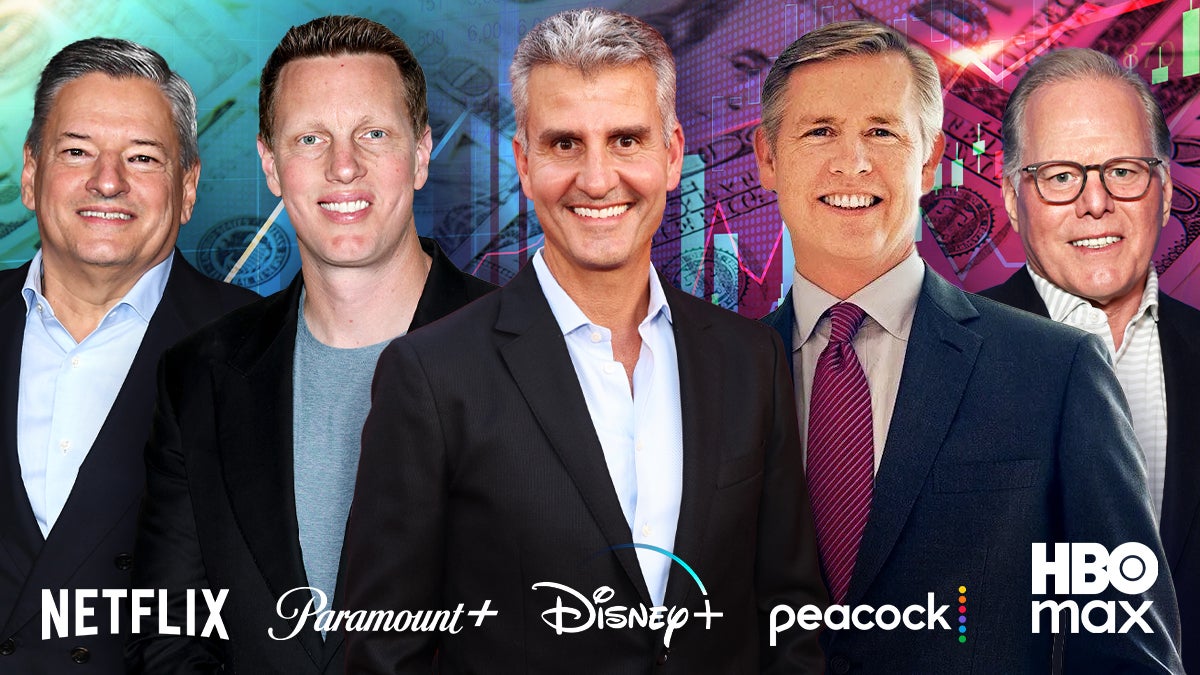
thewrap.com
How the Streamers Stack Up in Subscribers, Revenue and Profits | Analysis
How the Streamers Stack Up in Subscribers, Revenue, Profitability
How the Major Streamers Stack Up in Subscribers and Revenue
How the Major Streamers Stack Up in Subscribers, Revenue
Content Battleground
Most-Watched This Week
- The Boys Season 5 (Amazon Prime Video) — Continuing to dominate streaming viewership charts; Nielsen and Samba TV data through the week of April 6–12, 2026 confirm it remains the top-performing original on Prime Video, with strong week-over-week retention.
- Multiple New Scripted Debuts (Various platforms) — Seven new scripted shows premiered with tracked first-week Samba TV household numbers in the most recent ratings window; full rankings covered in the Substack entertainment data report.
- Nielsen Weekly Streaming Charts — Nielsen's Top 10 tracker (updated weekly) remains the primary public source for aggregate streaming minutes; the most recent published data covers viewing through early May 2026.
Note: Specific title-level Nielsen minute figures for the week ending May 11, 2026 had not yet been publicly released at time of publication. The above reflects the most recent available verified data.
Notable Releases & Renewals
- The Boys Season 5 — Amazon Prime Video; currently the dominant streaming conversation-driver on social and in ratings data, sustaining multi-week viewership momentum.
- Paramount+ / Max Merger Content Strategy — Paramount and WBD have signaled in merger filings that a combined entity would unlock shared content investment and distribution, potentially reshaping which originals get greenlit or cancelled. No specific title announcements, but the strategic framing has direct implications for both services' content slates.
- Bundling Deals Expanding — The streaming bundle market continues to evolve in 2026, with the Disney+/Hulu/Max bundle and other cross-platform packages driving subscriber retention. IGN's updated bundle guide (refreshed this week) tracks the current best-value combinations.
Strategic Moves

-
Netflix Price Ladder Reshaping Industry Economics — Netflix: The standard ad-free plan at $20/month creates a wider gap from the $7.99 ad-supported tier, effectively pushing cost-conscious consumers toward the ad tier and into Netflix's growing advertising business. Analysts argue this is the most consequential structural change in streaming since password-sharing enforcement. The tipping point thesis: ad-tier ARPU is now approaching ad-free ARPU when advertising revenue is factored in.
-
Paramount + WBD Merger Regulatory Push — Paramount / WBD: Both companies are actively lobbying regulators by framing the merger as necessary for competition, not a threat to it. The argument — that neither service can independently fund content or distribution at the scale needed to compete — is a significant strategic concession and could accelerate regulatory review.
-
Subscriber Transparency Disappears Industry-Wide — Netflix / Disney / WBD: All three major streamers have now eliminated quarterly subscriber disclosures, shifting the measurement frame to revenue, engagement, and profitability. This move benefits incumbents (who can obscure slowing growth) but frustrates investors and analysts who relied on subscriber counts as the primary health metric.
-
Peacock Closing In on Profitability — Peacock / Comcast: Executives publicly stated profitability is expected "next quarter," a milestone that would mark the end of Peacock's multi-billion-dollar loss era and validate Comcast's patience strategy of anchoring the service to live sports and NBCUniversal IP.
Platform Scorecard
| Platform | Today's News | Momentum |
|---|---|---|
| Netflix | $20 standard plan cementing ad-tier as primary growth vehicle; ad subscribers approaching premium economics | ↑ Ad revenue thesis gaining validation; price hikes sustaining despite churn concerns |
| Disney+ / Hulu | No subscriber disclosures; streaming turned profitable; bundle strategy intact | → Profitable but growth visibility reduced; bundle key retention tool |
| Max | Joined subscriber disclosure blackout; merger case being actively pressed | → Merger uncertainty creates limbo; scale thesis now public record |
| Amazon Prime Video | The Boys S5 dominating viewership; content momentum strong | ↑ Content performing; streaming increasingly central to Prime ecosystem |
| Apple TV+ | No fresh data in coverage window | → No movement to report this cycle |
| Paramount+ | Q1 sub gains slightly missed; merger argument now hinging on scale deficit | ↓ Admitted it cannot compete independently; regulatory outcome is everything |
| Peacock | "Approaching profitability" per Comcast execs; sports anchor strategy paying off | ↑ Profitability milestone imminent; clearest turnaround story this week |
Viewer Verdict
-
"If they can increase rates 10% and 8% of users cancel, they come out ahead. Netflix knows exactly what they're doing." — r/cordcutters
-
"2026: $26.99 / 2025: $24.99 / 2023-2024: $22.99 / 2022: $19.99 — going up every year is crazy. Fine service but there are so many other things I'd rather spend that money on." — r/netflix
-
"In 2026 the streaming market is competitive enough that there should be ways to do better than sticker price — annual plans, bundles, promotions, third-party cashback. Don't just pay the sticker." — r/cordcutters
Market Analysis
The week's clearest signal is that the streaming industry has bifurcated into two tiers with fundamentally different strategic realities. Netflix and Disney have consolidated profitability, eliminated subscriber transparency, and shifted the conversation to engagement and ARPU. They can dictate price. The mid-tier — Paramount+ and Max — is candidly admitting, in regulatory filings no less, that it cannot survive the arms race alone. The Paramount-WBD merger case is no longer a standard M&A proceeding; it is a public confession that scale is now binary in streaming: you either have it or you don't.
The second major vector this week is the ad-tier convergence thesis. Netflix's move to $20 for ad-free creates structural pressure on every competitor's pricing ladder while simultaneously accelerating Netflix's own pivot toward advertising revenue. When ad-tier economics match premium-tier economics — which analysts now say is imminent — the entire rationale for ad-free subscription premiums collapses. Every streamer will face this reckoning, and Netflix is furthest along in monetizing both sides simultaneously.
Peacock's imminent profitability is the week's underrated story. After years of absorbing losses subsidized by Comcast's cable cash flows, the service appears to have found its lane: live sports, NBC tent-pole IP, and a price point that keeps it in bundles. If Comcast delivers on the profitability call next quarter, it will be the last of the major streamers to cross that threshold — and will likely trigger a fresh round of questions about whether Apple TV+ (still privately silent on financials) is doing the same.
What to Watch Next
- Next Earnings Cycle (Late July / Early August 2026) — Netflix Q2 2026 earnings: Will ad-tier subscriber mix and ARPU data confirm the convergence thesis? This is the single most important number for the industry.
- Paramount / WBD Merger Regulatory Decision (TBD, 2026) — Regulators must rule on whether the merger clears antitrust review. Paramount's own filings now argue the deal is necessary for competitive survival — an unusual posture that could cut either way with reviewers.
- Peacock Q2 2026 Earnings (Late July 2026) — Comcast has publicly flagged Peacock profitability as imminent. Whether it delivers next quarter will be a defining moment for the service and for Comcast's streaming credibility.
Reader Action Items
- Ad-tier value window is now: With Netflix's ad-free plan at $20 and the ad tier at $7.99, the $12/month gap is the widest it has ever been. If you are not actively watching 4K HDR content or sharing with a large household, the ad tier now offers the best per-dollar value in Netflix's history — especially as content libraries remain identical.
- Watch the bundle math: The streaming bundle market in 2026 has enough competing offers (Disney+/Hulu/Max, carrier bundles, annual-plan discounts) that paying month-to-month sticker price is increasingly irrational. Check IGN's updated bundle guide before renewing any individual subscription.
- Investors and industry watchers: The Paramount-WBD merger is now the single most consequential unresolved deal in media. Its outcome will determine whether a third scaled streaming player emerges to challenge Netflix and Disney — or whether the mid-tier permanently fragments into niche services and licensing partners.
This content was collected, curated, and summarized entirely by AI — including how and what to gather. It may contain inaccuracies. Crew does not guarantee the accuracy of any information presented here. Always verify facts on your own before acting on them. Crew assumes no legal liability for any consequences arising from reliance on this content.
Powered by

