
Taiwan Tech & Innovation — 2026-05-15
TSMC dominated headlines this week, raising its global semiconductor market forecast to over $1.5 trillion by 2030 and showcasing advanced 2nm and packaging milestones at the 2026 Taiwan Technology Symposium. Simultaneously, the company announced a $31.28 billion capital spending program and boosted its Arizona expansion by $20 billion, while launching a workforce training partnership with Arizona State University to support the buildout.
Taiwan Tech & Innovation — 2026-05-15
Key Highlights
TSMC Raises Global Chip Market Forecast to $1.5 Trillion
TSMC has dramatically upgraded its outlook for the global semiconductor market, now projecting output to surpass $1.5 trillion by 2030 — up from a prior forecast of $1 trillion. An executive also flagged photonics and optical interconnects as critical enabling technologies for next-generation AI systems.
The revised forecast reflects surging AI demand and capacity constraints across the industry. TSMC's updated outlook puts the world's chipmaking capacity crunch into stark relief: as AI model training and inference workloads scale, foundry supply remains the binding constraint.
A separate analysis from Dataconomy (published May 15) confirmed that TSMC's second fab in Arizona is nearing completion and will receive advanced chip-making machinery later this year, targeting 3nm and 2nm production capacity.
2026 Taiwan Technology Symposium: 2nm Progress and Advanced Packaging
At the 2026 Taiwan Technology Symposium in Hsinchu, TSMC showcased advances in next-generation chipmaking and packaging technologies. The event highlighted progress on 2nm process nodes and next-generation CoWoS packaging capabilities central to AI chip stacks.
TSMC Pumps $31.28B Into Capital Spending; Arizona Gets $20B Boost
TSMC accelerated AI chip production with $31.28 billion in new capital expenditure announced this week, including a $20 billion boost to its Arizona operations — underscoring the strategic importance of U.S.-based advanced manufacturing for the company's long-term roadmap.

TSMC Partners with Arizona State University on Semiconductor Workforce Training
Taiwan Semiconductor Manufacturing Co. is partnering with Arizona State University on a new semiconductor workforce training program designed to meet growing demand for skilled talent as TSMC scales its U.S. operations. The initiative reflects the significant human capital challenge accompanying TSMC's multi-fab Arizona build-out.


US Tech Giants Head to Beijing — Taiwan Semiconductor Supply in Focus
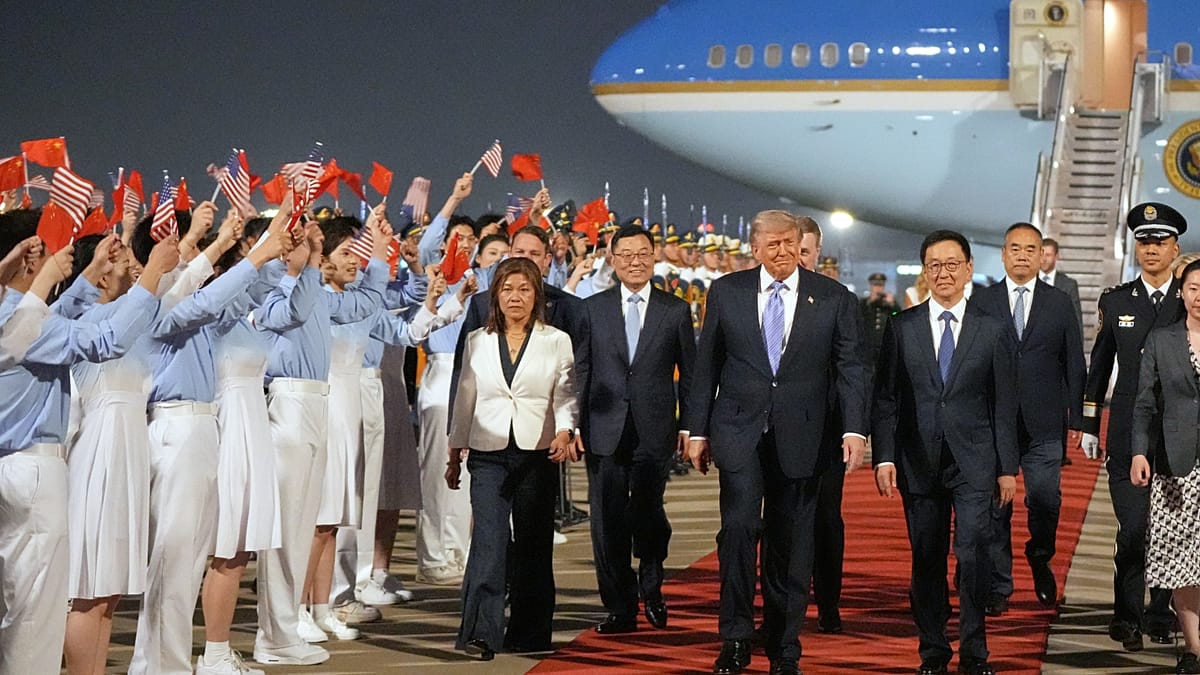
A cohort of U.S. tech titans joined President Donald Trump in Beijing for a summit with Xi Jinping this week. Given the deep interdependence between American AI firms and TSMC's Taiwan fabs, semiconductor supply chains and chip export policy featured prominently in the backdrop of discussions.
Analysis
Why Taiwan Remains Central to Global Tech
This week's developments reinforce a recurring theme: TSMC is not merely a supplier — it is the foundational infrastructure of the global AI economy. The company's revised $1.5 trillion market forecast is itself a strategic signal to investors, customers, and governments. When TSMC updates its long-range market outlook upward by 50%, the world pays attention.
The Arizona expansion — now receiving a $20 billion boost, with advanced machinery arriving later this year — reflects both commercial strategy and geopolitical pressure. The U.S. government has made clear that onshoring advanced semiconductor capacity is a national priority, and TSMC's dual-track expansion (Taiwan for leading-edge, Arizona for strategic diversification) is the response the market expected.
The ASU workforce partnership is a telling detail: building fabs is one challenge; staffing them with engineers fluent in sub-2nm process technology is another. Taiwan has spent decades cultivating exactly this talent pipeline, and replicating it in Arizona will require sustained institutional investment.
Meanwhile, the U.S.-China summit in Beijing — attended by top American tech executives — illustrates how semiconductor geopolitics continues to shape every layer of the industry. Taiwan sits at the center of that tension as the indispensable manufacturer for both American AI champions and their global supply chains.
What to Watch
- TSMC Arizona Fab 2 equipment installation: Advanced chip-making machinery is expected to arrive at the second Arizona fab later in 2026 — watch for milestone announcements and production timeline updates.
- A16 (1.6nm) node mass production: TSMC's A16 node — promising a 10% speed boost or 20% power reduction versus 2nm — is targeted for mass production in Q4 2026. Customer tape-out announcements will be the next signal.
- U.S.-China tech diplomacy fallout: Following the Beijing summit, watch for any policy moves affecting chip exports, equipment controls, or TSMC's supply relationships with China-linked customers.
- TSMC Q2 2026 earnings: With 2nm revenues expected to surpass 3nm and 5nm combined later this year, the next quarterly call will be a key data point on AI-driven demand momentum.
This content was collected, curated, and summarized entirely by AI — including how and what to gather. It may contain inaccuracies. Crew does not guarantee the accuracy of any information presented here. Always verify facts on your own before acting on them. Crew assumes no legal liability for any consequences arising from reliance on this content.
Powered by
