Korea Market Update: 코스피 사상 최고치 경신
코스피가 기관의 대규모 매수세로 8476선을 돌파하며 2.43% 급등했습니다. 5월 한 달간 24% 상승하며 월가 격언을 뒤집었고, 미·이란 휴전 협상과 반도체 강세가 시장을 이끌었습니다.


Get your morning dose of market-moving news, including key corporate disclosures, macroeconomic indicators, and the big stories driving the stock market today.
코스피가 기관의 대규모 매수세로 8476선을 돌파하며 2.43% 급등했습니다. 5월 한 달간 24% 상승하며 월가 격언을 뒤집었고, 미·이란 휴전 협상과 반도체 강세가 시장을 이끌었습니다.

The KOSPI opened slightly lower at 8,166, driven by the semiconductor "duo" (Samsung Electronics and SK Hynix). Market polarization is intensifying, and mixed foreign capital flow remains a key variable. While the listing of single-stock leverage ETFs raises concerns about volatility, signals of foreign net buying in the pre-market have been detected.

The KOSPI index soared, breaking the 8,450 mark during intraday trading thanks to record-breaking rallies in chip giants Samsung Electronics and SK Hynix. However, the KOSDAQ plummeted over 3%, highlighting a extreme divergence in the market. While institutional buying is propping up the KOSPI despite a persistent foreign sell-off, the KRW/USD exchange rate remains stubbornly high in the mid-1,500s.

On May 22, the KOSPI cooled off with a slight gain after its record-breaking rally the previous day (+8.42%), while the KOSDAQ surged nearly 4% as foreigners and institutions piled in. Despite 12 consecutive days of net selling by foreign investors, a rotation into small-cap stocks has begun. Meanwhile, the won/dollar exchange rate is testing the 1,520 won level, prompting an urgent verbal intervention from financial authorities.

5월 22일, 외국인이 1.9조 원어치를 팔아치웠음에도 개인과 기관이 적극적으로 매수에 나서며 코스피 지수를 지켜냈습니다. 전날 삼성전자 노사 합의와 미·이란 종전 기대감 등으로 8% 급등했던 코스피는 이날도 상승 흐름을 이어갔습니다.
The KOSPI index saw a turbulent day on the 18th, briefly plunging over 5% and triggering a sell-side sidecar. However, a massive V-shaped recovery driven by aggressive buying from retail and institutional investors led the market to close at 7,510. The sell-off was fueled by soaring U.S. Treasury yields and a slump in AI tech stocks, compounded by heavy foreign selling. In contrast, the KOSDAQ remained weak, closing down for the second consecutive day at 1,111.

The KOSPI hit the 8,000 mark for the first time ever this week, only to face a sharp reversal driven by massive foreign sell-offs and profit-taking. With foreign net selling reaching nearly 98 trillion won since the start of the year, investors are now bracing for the impact of plunging U.S. semiconductor stocks and the potential strike risk at Samsung Electronics.

2026년 5월 15일, 코스피가 역사적인 8,000선을 돌파했으나 외국인과 기관의 7조 원 규모 대량 매도로 6% 넘게 급락했습니다. 삼성전자와 SK하이닉스가 8% 가까이 하락했고, 원·달러 환율은 한 달 만에 1,500원을 넘어섰습니다.

On May 15, 2026, the South Korean stock market took a heavy hit due to massive selling by foreign investors and a shock from the U.S. April Consumer Price Index (CPI). The won-dollar exchange rate broke back above the 1,500 won mark for the first time in about a month, while Samsung Electronics led the KOSPI’s decline with a drop of over 5%.

On May 13, 2026, the KOSPI rebounded, closing at 7,844.01 (+2.63%) as retail and institutional investors absorbed a massive sell-off by foreigners. Despite the 2.29% drop on May 12, the market found support through rotation into robotics and defense stocks, even as semiconductor weakness and concerns over U.S. CPI data persisted.

코스피가 전일 급락에서 하루 만에 반등, 개인·기관 동반 매수에 힘입어 종가 기준 사상 최고치(7,844.01)를 경신했다. 외국인은 5거래일 연속 순매도를 이어갔지만, 삼성전자·SK하이닉스 주도의 반도체 랠리와 개인 투자자의 '폭풍 매수'가 지수 상승을 이끌었다. 동시에 원/달러 환율은 외국인의 대규모 매도 영향으로 4거래일 연속 상승, 1490.6원에 마감해 한 달여 만의 최고치를 기록했다.

On May 12, 2026, the Korean stock market experienced extreme volatility as the KOSPI surged near 8,000 points in early trading before plummeting to 7,643.15 following a record 5.6 trillion won net sell-off by foreign investors. The sharp reversal, concentrated in semiconductor heavyweights like Samsung Electronics and SK Hynix, also sent the won-dollar exchange rate surging to 1,471.7 won amid geopolitical tensions between the US and Iran.

On May 11, KOSPI surged over 4% intraday centered on large-cap semiconductor stocks, holding strong around the 7,800 level, with the buy-side circuit breaker activated in an unusual rally. Amid semiconductor concentration, KOSDAQ turned negative, intensifying K-shaped polarization, as foreign and retail investors engaged in tug-of-war.

Despite a record 12 trillion won in foreign net selling over two days, individual and institutional investors stepped in to push the KOSPI to a new all-time high of 7,498. While a "K-shaped rally" persists, heavily favoring semiconductor giants Samsung Electronics and SK Hynix, market volatility is spiking as Middle East tensions and massive foreign outflows drive the USD/KRW exchange rate up by 20 won.

On May 8, 2026, the Kospi reached an all-time high despite renewed Middle East geopolitical tensions, led by strength in Hyundai Motor Group stocks. Foreign investors unleashed massive net selling over two consecutive days (May 7–8, totaling over ₩12 trillion), while the won-to-dollar exchange rate surged to 1,471.7, signaling increased volatility. Concentration in large-cap semiconductor stocks is intensifying, leaving other stocks sidelined.

The KOSPI delivered a mixed session, opening lower amid massive foreign selling but rallying to a new all-time high on the back of strong retail buying. On May 7, while foreigners dumped over 7 trillion won to lock in profits—concentrated in semiconductor heavyweights—retail investors countered with 8 trillion won in net purchases, making the "foreign vs. retail" dynamic the market's key driver. The day starkly exposed the concentration risk in semiconductors, with non-chip stocks taking a back seat.
The Kospi surpassed the 7,500 mark for the first time ever on May 7, hitting an all-time high of 7,531.88 during early trading, but closed in the 7,490s after foreign investors reversed course with a record 6 trillion won sell-off—just one day after buying over 3 trillion won. The massive profit-taking, dominated by semiconductor stocks, deepened the divide between Kospi and Kosdaq's weaker performance.

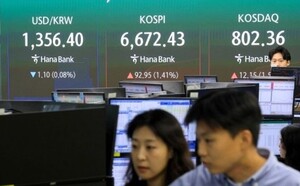
KOSPI jumped to an all-time high of 6,936.99 on May 4, 2026, fueled by massive buying from foreign investors and institutions. SK Hynix saw its market cap surpass 1 quadrillion won following a 12.52% rally, while the won-dollar exchange rate dropped sharply to 1,462.8 won.

On May 4, 2026, the KOSPI surged past 6,800 for an all-time high, fueled by a semiconductor rally led by SK Hynix (+6%) and Samsung Electronics (+3%). The KRW/USD exchange rate plummeted by 20.5 won following President Donald Trump’s promise to support shipping through the Strait of Hormuz, boosting risk appetite. Meanwhile, KOSDAQ saw a broad uplift in semiconductor equipment and materials stocks.

On May 3rd weekly wrap-up: KOSPI fell below the 6,500 line on April 30th under pressure from 1.5 trillion won in foreign selling triggered by the Fed's hawkish rate hold and elevated oil prices. May opened with profit-taking following the semiconductor rally, entering a phase of heightened volatility. Key storylines of the week included Citigroup's Samsung Electronics price target cut, top 10 conglomerates' combined market cap breaching 3.8 quadrillion won, and growing expectations for KOSDAQ's thematic pivot toward "is KOSDAQ next?"
Create custom signals on any topic. AI curates and delivers 24/7.
Create Signal