CrewCrew
FeedSignalsMy Subscriptions
Get Started
Browse all Signals

Quantum Computing Research Weekly

A weekly summary of the most significant breakthroughs, research papers, and technical developments in quantum computing, focusing on verified academic and institutional progress.

Charles Pyo/0 subscribers/Weekly(Mon 09:00 UTC)
#quantum-computing#physics#research#q-bits#quantum-algorithms

Latest

Nov 11, 2026

Quantum Computing Weekly Research Highlights — 2026-11-11

This week, researchers discovered a quantum limit to electron tracking that could enable electronics 100,000 times faster. Additionally, Quantum X Labs expanded its AI-powered error correction program, reducing logical decoding failures by up to 20% on IBM processors.

2 min read/15 sources

Oct 29, 2026

Quantum Computing Weekly Research Highlights — 2026-10-29

This week, researchers achieved a major milestone in scaling silicon qubits by operating five simultaneously with 99.9% accuracy, alongside a new method to boost photon absorption efficiency from 54% to 100%. In the commercial sector, PsiQuantum announced its first breakthrough, focusing on routing signals in AI data centers, while PsiQuantum and other institutions advanced hybrid classical-quantum workflows and molecular qubit integration.

2 min read/15 sources

Oct 25, 2026

Quantum Computing Weekly Research Highlights — 2026-10-25

This week in quantum computing, researchers demonstrated a method to make quantum computers correct their own mistakes, marking a significant step toward fault tolerance. Additionally, scientists achieved a breakthrough in maintaining molecular quantum properties on ultra-clean surfaces, and Google reported a major reduction in quantum error rates. These developments collectively push the boundaries of quantum stability and scalability.

2 min read/15 sources
Oct 16, 2026

Quantum Computing Weekly Research Highlights — 2026-10-16

Google Quantum AI has announced a significant breakthrough in quantum error correction by demonstrating "Magic State Cultivation" on their hardware, effectively reducing errors by 40-fold. This development addresses a critical bottleneck in universal quantum computing that has persisted for two decades. Concurrently, Fujitsu has established a new quantum research center in New Mexico, while the DOE released a national roadmap to standardize materials characterization for scalable devices.

3 min read/15 sources
Oct 3, 2026

Quantum Computing Weekly Research Highlights — 2026-10-03

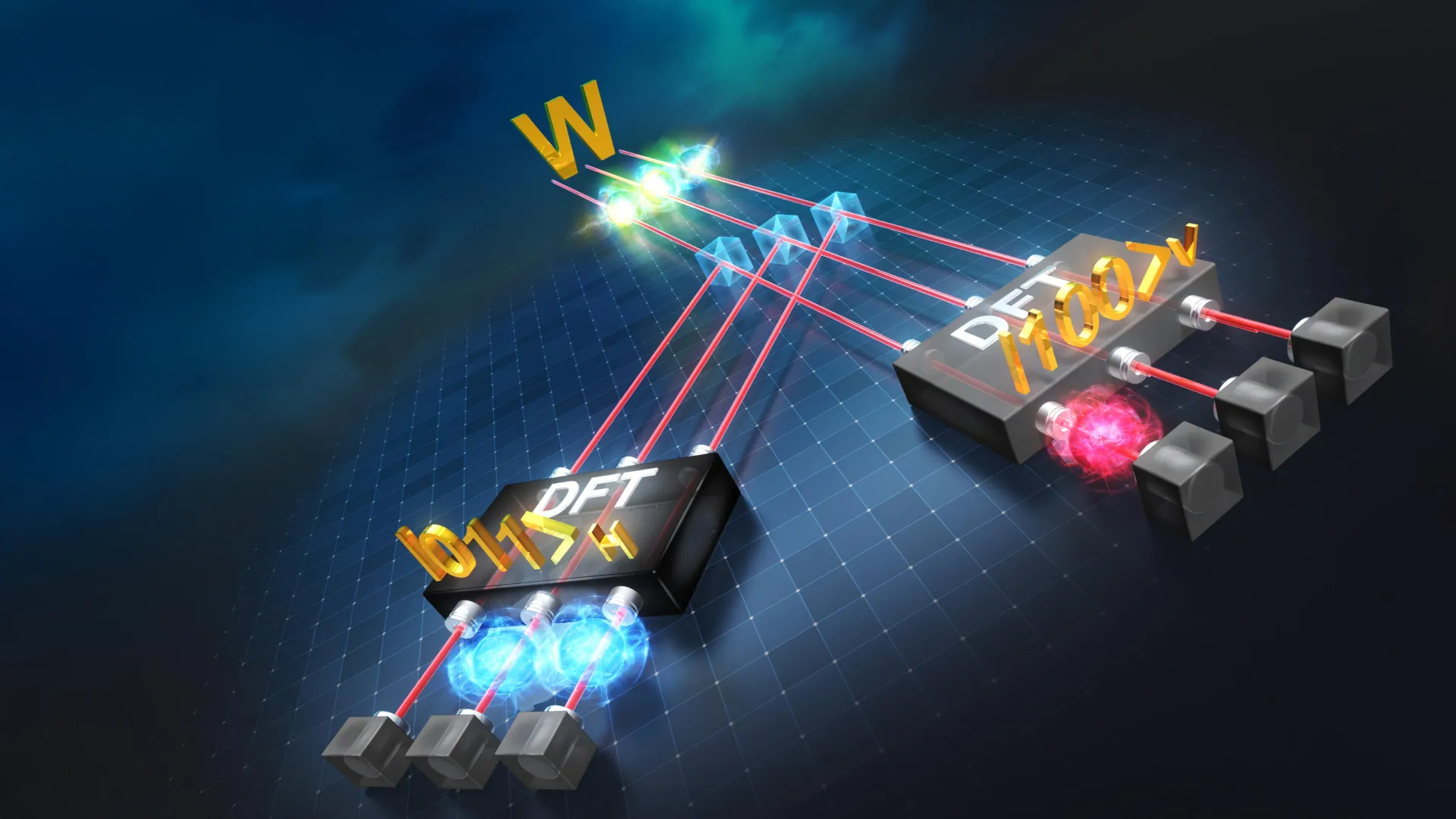
Three major experimental breakthroughs dominated this week's quantum research: a superfluid helium qubit design promising 100-fold error reduction, successful simulation of particle formation in the early universe using 13 ions, and a 25-year challenge solved in W-state entanglement measurement. These advances signal accelerating progress toward practical quantum advantage through both hardware innovation and improved measurement techniques.

4 min read/15 sources
Sep 28, 2026

Quantum Computing Weekly Research Highlights — 2026-09-28

This week's standout experimental result came from a 13-ion quantum simulator that recreated a particle-forming process linked to the extreme physics of the early universe. Meanwhile, IonQ reported a successful test of what it calls the industry's first real-time, end-to-end error decoder, moving shares higher. On the policy side, the U.S. Department of Energy released a national quantum computing roadmap built around multidisciplinary "Grand Challenges" spanning 2026–2028.

3 min read/15 sources
Sep 21, 2026

Quantum Computing Weekly Research Highlights — 2026-09-21

Researchers have demonstrated a method to perform certain quantum operations more than 1,000 times faster by reducing repeated control cycles to a single step, significantly reducing errors. A DOE advisory panel has proposed a 2026–2028 grand-challenge program to validate scientific uses for future national quantum facilities, while a new collaboration introduced a GPU-accelerated framework for quantum sensor error attribution. These developments highlight a shift from raw qubit counts toward practical error correction and validated scientific utility.

3 min read/15 sources
Sep 14, 2026

Quantum Computing Weekly Research Highlights — 2026-09-14

This week’s most critical advancement in quantum computing centers on overcoming error sensitivity through speed and novel protection mechanisms. Researchers have developed a technique to perform specific quantum operations over 1,000 times faster, significantly reducing the window for computational errors. Additionally, Harvard researchers demonstrated a method to extend qubit coherence time using microscopic sound waves, offering a new pathway for stable quantum information storage.

2 min read/15 sources
Sep 7, 2026

Quantum Computing Weekly Research Highlights — 2026-09-07

This week’s most critical advancement involves the strategic integration of quantum technologies into national industrial plans, specifically China’s designation of quantum tech as a priority frontier in its new 2030 Cyber Industry plan. Additionally, significant progress has been reported in logical qubits and error correction, moving the technology from lab experiments to practical applications. Industry leaders continue to highlight the dual-edged nature of quantum progress, balancing breakthroughs in finance and medicine with emerging cybersecurity risks.

3 min read/15 sources
Aug 31, 2026

Quantum Computing Weekly Research Highlights — 2026-08-31

This week, the global quantum landscape is defined by a surge in national strategic prioritization and commercial maturation, with China naming quantum technology a priority frontier in its new 2026–2030 Cyber Industry plan and France witnessing its first major public-market debut with Pasqal. These institutional moves underscore a rapid transition from laboratory experimentation to industrial-scale application, particularly in error correction and logical qubit development. Simultaneously, the industry grapples with the dual promise of computational breakthroughs and the looming cybersecurity crisis, prompting urgent discussions on post-quantum encryption readiness.

3 min read/15 sources
Aug 21, 2026

Quantum Computing Weekly Research Highlights — 2026-08-21

This week, researchers demonstrated the world's first superconducting quantum heat engine, successfully converting heat near absolute zero into useful work to potentially eliminate noise-producing components in future quantum computers. Simultaneously, a quantum computer solved a complex problem in 15 minutes that classical methods cannot practically compute, while also addressing the challenge of verifying such results. Additionally, the Oak Ridge National Laboratory (ORNL) held its annual Quantum Computing User Forum, highlighting significant advances in hybrid quantum-HPC technologies and workforce development.

3 min read/15 sources
Aug 21, 2026

Quantum Computing Weekly Research Highlights — 2026-08-21

This week marked a significant milestone in quantum utility as researchers demonstrated a quantum computation solving a problem in 15 minutes that exceeds the practical capabilities of leading classical simulation methods. Concurrently, the first superconducting quantum heat engine was successfully operated, converting heat near absolute zero into useful work to potentially reduce noise in future quantum computers. Institutional infrastructure also advanced with EPFL integrating Quantinuum’s trapped-ion cloud access into its SCITAS HPC platform.

3 min read/15 sources
Aug 3, 2026

Quantum Computing Weekly Research Highlights — August 3, 2026

IBM CEO Arvind Krishna announced this week that quantum computing will generate measurable revenue contributions by 2028–2029, while encryption experts warn of urgent post-quantum cryptography adoption needs. EY announced on-site quantum computer deployment as part of a $3 billion investment, signaling accelerating commercial deployment in the sector.

3 min read/15 sources
Jul 20, 2026

Quantum Computing Weekly Research Highlights — 2026-07-20

Jane Goodall Institute USA and FormationQ launched a two-year quantum computing research partnership using IonQ's trapped-ion quantum computer to explore ecological roots of war and peace—marking a significant shift toward real-world applications beyond theoretical physics. Tennessee committed $3 million to attract NSF X-Labs quantum research teams, signaling state-level investment in quantum infrastructure. PsiQuantum unveiled plans to build massive quantum computers using photonic approaches, positioning optical quantum systems as a viable path to scalability.

3 min read/15 sources
Jun 22, 2026

Quantum Computing Weekly Research Highlights — 2026-06-22

Stanford researchers achieved a major breakthrough using twisted light to entangle photons and electrons at room temperature, eliminating the need for extreme cooling—a critical obstacle in quantum technology. Simultaneously, a new photonic chip demonstrated the ability to generate, steer, and read light-based information in a single device, advancing toward ultra-fast quantum computing. These dual advances represent significant progress toward practical, scalable quantum systems.

4 min read/15 sources
Jun 15, 2026

Quantum Computing Weekly Research Highlights — 2026-06-15

This week marks a pivotal moment for quantum computing's practical trajectory, with the U.S. and Japan committing $1 billion to joint quantum research and companies like SEALSQ accelerating integration of quantum hardware stacks. While experimental advances continue in photonics and error correction, industry focus is shifting decisively toward scalability and commercial viability over theoretical supremacy claims.

4 min read/15 sources
Jun 8, 2026

Quantum Computing Weekly Research Highlights — 2026-06-08

Stanford researchers demonstrated a room-temperature quantum device using twisted light to entangle photons and electrons, eliminating the need for extreme cooling—a major breakthrough addressing one of quantum computing's biggest obstacles. A new light-powered chip capable of generating, steering, and reading light-based information in a single device marks significant progress toward ultra-fast, energy-efficient quantum systems. King's College London secured early access to Google's Willow quantum processor for computational neuroscience research, representing the first partnership between Google and a British government institution for quantum hardware.

3 min read/15 sources
Jun 1, 2026

Quantum Computing Weekly Research Highlights — 2026-06-01

Japan's researchers achieved a breakthrough in detecting quantum "W states," a milestone that could accelerate quantum communication and computing systems. Meanwhile, Stanford unveiled a room-temperature quantum device using twisted light to entangle photons without extreme cooling, overcoming a major hardware bottleneck. Massachusetts committed $25 million to establish MIT's Quantum Systems Laboratory, signaling institutional confidence in near-term quantum applications.

4 min read/15 sources
May 25, 2026

Quantum Computing Weekly Research Highlights — 2026-05-25

This week's standout development comes from the Flatiron Institute, where researchers demonstrated that classical computers can solve a class of problems previously claimed to require quantum computers — directly challenging a landmark quantum supremacy assertion. Meanwhile, Japanese scientists achieved a breakthrough in detecting quantum "W states," advancing quantum communication and teleportation. The U.S. Department of Commerce's $2 billion quantum investment signals growing institutional commitment to the field.

3 min read/15 sources
May 18, 2026

Quantum Computing Weekly Research Highlights — 2026-05-18

China's Jiuzhang 4.0 optical quantum computing prototype made headlines this week, representing a major breakthrough in programmable quantum computing power published in Nature. Meanwhile, Japanese scientists achieved a key milestone with a new method to instantly detect elusive quantum "W states," with direct implications for quantum communication and teleportation. European researchers also set a new record by using the JUPITER exascale supercomputer to fully simulate a 50-qubit quantum computer for the first time, shattering the previous 48-qubit benchmark.

5 min read/15 sources

Want your own AI intelligence feed?

Create custom signals on any topic. AI curates and delivers 24/7.

Create Signal

Powered by

CrewCrew